

The World Meteorological Organization said in early September that El Niño was firmly established and likely to strengthen further. Its models put the probability that the event persists through February 2027 at nearly 100%, with very strong intensity expected before a peak toward the end of 2026.
That does not imply uniform drought across Asia. El Niño changes rainfall patterns unevenly, and the strength of the event does not determine the impact in any single country. Reservoir levels, planting calendars, local rainfall, fuel stocks and grid design will shape the outcome.
The economic risk is more specific. In exposed parts of South and Southeast Asia, weak rainfall can constrain food production and hydropower at the same time. Heat then raises cooling demand while less low-cost generation is available. One climate event can therefore show up in food prices, fuel-import bills, utility subsidies and industrial costs.
The Asian Development Bank has warned that some of the strongest economic effects may become more visible in 2027. The combination matters most in economies where food carries a large weight in consumer prices and lost hydropower has to be replaced with imported coal, gas or oil products.
One water shortage, two markets
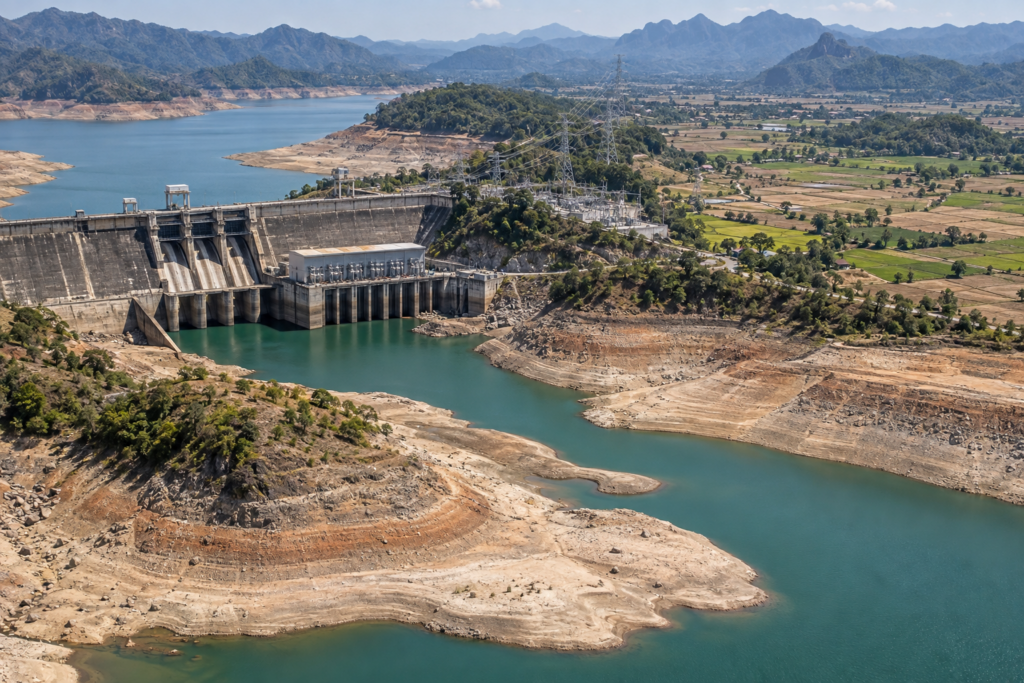
Agriculture and power are often analysed separately. During a strong El Niño, they can compete for the same water.
Rain-fed rice is especially vulnerable when dry conditions coincide with planting. Irrigated farms have more protection, but only while rivers and reservoirs can support them. The same reservoirs may also supply hydropower. Lower inflows therefore affect farms, turbines and municipal water systems at the same time.
Indonesia offers a current indication of the physical risk. The country’s meteorological agency, BMKG, reported that the Niño 3.4 sea-surface temperature anomaly reached +2.83°C in August. Its September bulletin projected below-normal to normal rainfall across much of the country from October through December. The forecast will change, but it is already relevant to reservoir management, crop planning and power reserves.
Past events show the possible scale without providing a template for 2026. During the 2015-2016 El Niño, drought affected 85% of provinces in the Philippines. Viet Nam recorded crop damage across 400,000-600,000 hectares and aquaculture damage across another 70,000 hectares. India experienced a second consecutive weak monsoon in 2015, when rainfall reached 760.6 millimetres against a normal 887.5 millimetres.
Those figures should not be converted into a forecast for the current event. What matters for companies is basin-level rainfall, reservoir levels and planting conditions in the places that supply their crops, power and industrial inputs.
Less hydropower, more cooling demand
The electricity system is exposed from both sides. Drought can reduce hydropower output and restrict cooling water for thermal plants. High temperatures increase air-conditioning demand and can reduce the efficiency of parts of the grid and generation fleet.
ADB cites research covering roughly 1,600 dams, representing more than half of global installed hydropower capacity. About 35% showed statistically significant generation anomalies during El Niño or La Niña years. Gains in some places partly offset losses elsewhere, which is why continental averages can hide severe stress in an individual basin.
The Lancang-Mekong system illustrates the concentration of risk. Lower dry-season flows can constrain a cascade of hydropower plants while downstream users face the same shortage through irrigation pressure and saltwater intrusion in the Mekong Delta.
Where hydro output falls, utilities may turn to coal, gas or oil products. A local water shortage then becomes additional demand in internationally traded fuel markets. When fuel prices are already high or volatile, the result can be higher import costs, greater pressure on regulated tariffs and a larger subsidy bill.
Solar is not a complete hedge in every location. Research cited by ADB found that the most intense El Niño events can reduce photovoltaic output by as much as 15% for months in some regions, including eastern China. This is not an Asia-wide forecast; it is a reminder that weather risks across technologies can be correlated.
The inflation effect arrives in stages
Food prices can rise through weaker harvests, animal-feed costs and heat stress in livestock. Electricity costs can rise through fuel substitution and peak demand. Governments may add a third channel through export restrictions, emergency tariff changes or broad consumer subsidies.
Historical estimates cited by ADB place the headline-inflation effect of a typical El Niño shock at roughly 0.1 to 1.0 percentage points across countries. Another estimate found an average increase of about 5.5% in non-fuel commodity prices over the following year. These are historical relationships, not forecasts for 2027.
Timing matters. Reservoir stress can raise power costs while crops are still in the ground. Food shortages may appear later, after a weak harvest. An economy can therefore enter 2027 with higher generation costs and only then face a delayed increase in food inflation.
Preparation has commercial value
Governments can act before shortages become visible: adjust irrigation and crop guidance, target food reserves, secure fuel flexibility and prepare interconnection capacity and demand-response programmes.
Companies also have practical decisions to make. Food processors can review sourcing and inventory for exposed crops. Utilities and large power users can test backup-fuel and supply contracts. Water-intensive manufacturers can identify which facilities share stressed basins with cities, farms or hydropower plants.