

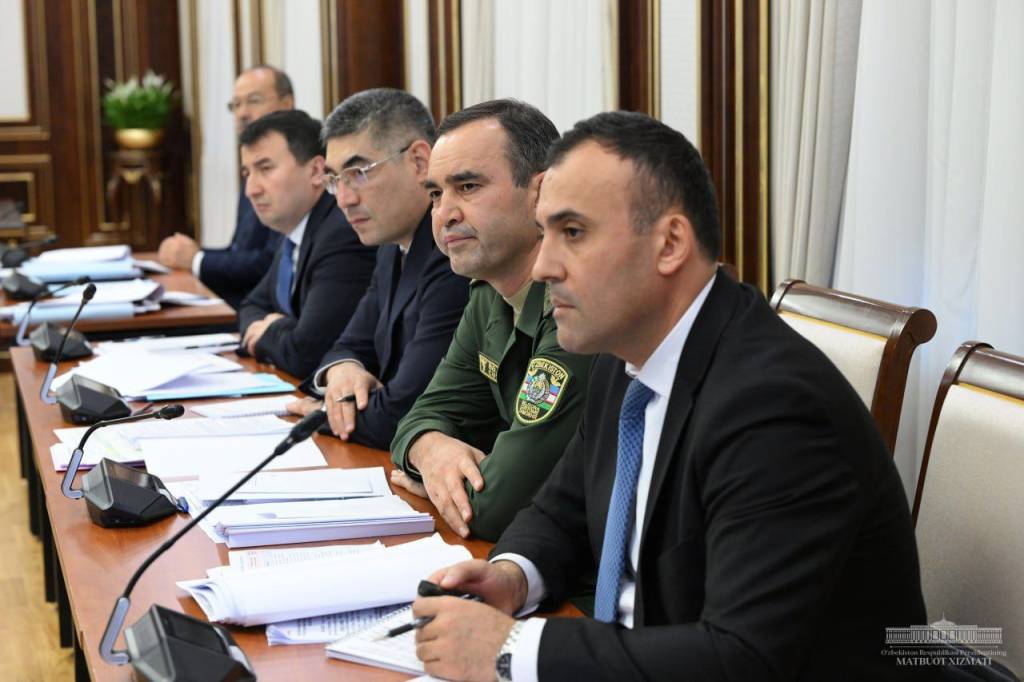
President Shavkat Mirziyoyev held a meeting to review the economic results of the first nine months of the year, the projections for the end of the year, and the macroeconomic forecasts for 2024.
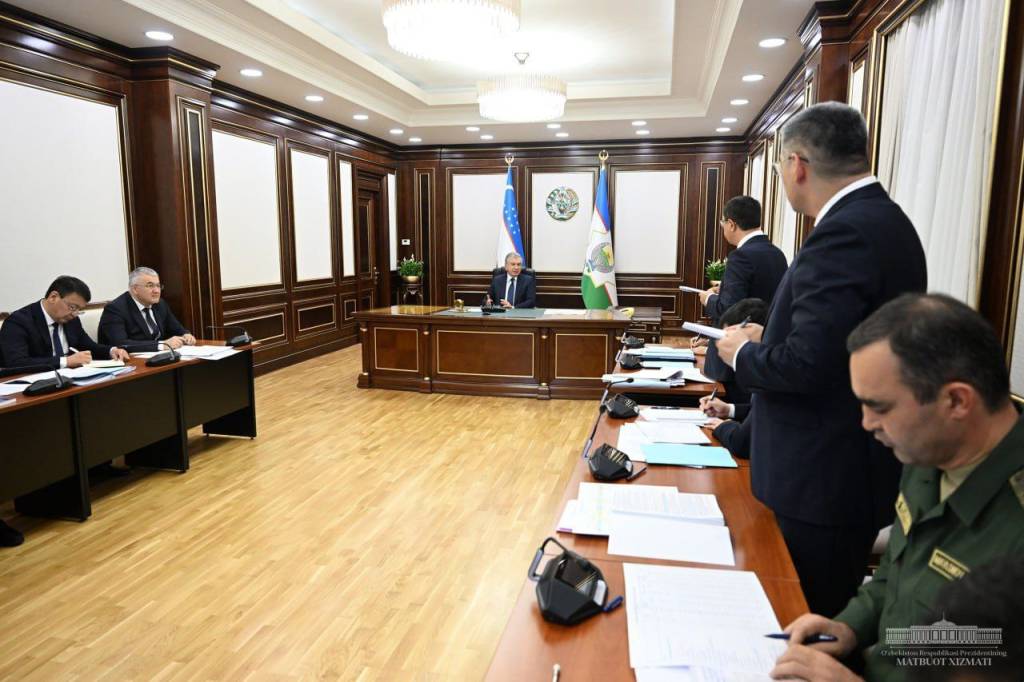
The Uzbek economy increased by 5.8 percent in the first nine months of the year, with industry growing by 5.7 percent, agriculture by 4.1 percent, and the service sector by 12.1 percent. In spite of the global market and logistics challenges, exports rose by 23.5 percent to $17.7 billion.
In order to implement large industrial and infrastructure projects in the economy and various regions, 226.6 trillion UZS of investments were attracted, representing an 11.8 percent rise from the same period in the prior year.

At the meeting, the anticipated indicators for the end of the year were evaluated. The Head of state noted that the complex and unpredictable global situation has a negative impact on the economy, so it is necessary to use internal resources to sustain economic growth.
Therefore, the value-added tax was lowered from 15 to 12 percent since 2023, giving entrepreneurs extra funds worth 7 trillion UZS.
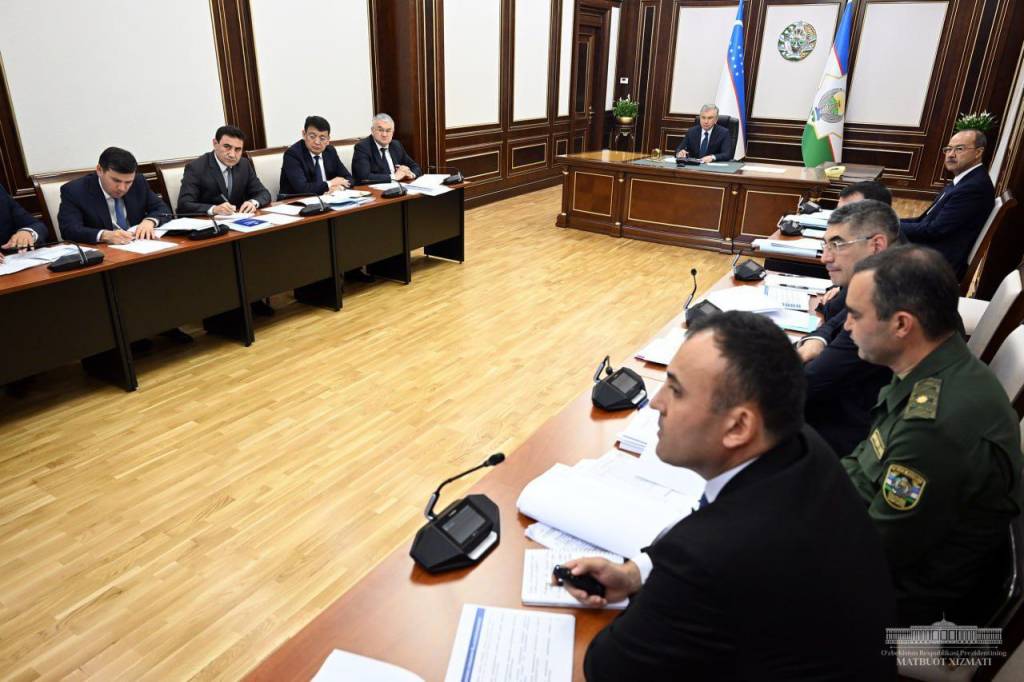
In addition, 35 trillion UZS were allocated for improving the infrastructure in the regions, and 19 trillion UZS for social support of the population. As a result, with the global economy estimated to rise by 3 percent this year, the domestic economy is expected to grow by at least 5.6 percent.
At the meeting, measures to maintain stable economic growth rates in 2024 were discussed in detail.
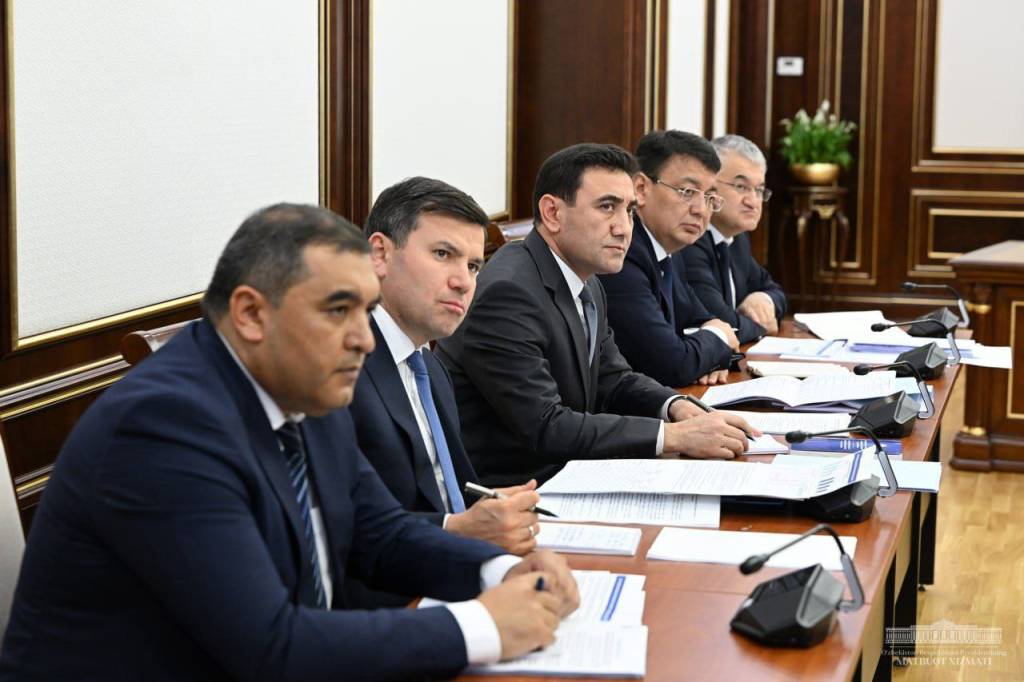
It was noted that there are all the possibilities and reserves to maintain the current rate of GDP growth next year.
In particular, there is potential for industry growth of 6 percent in 2024 by launching more than 300 projects worth $13 billion, stabilizing energy supplies, and increasing industrial efficiency.
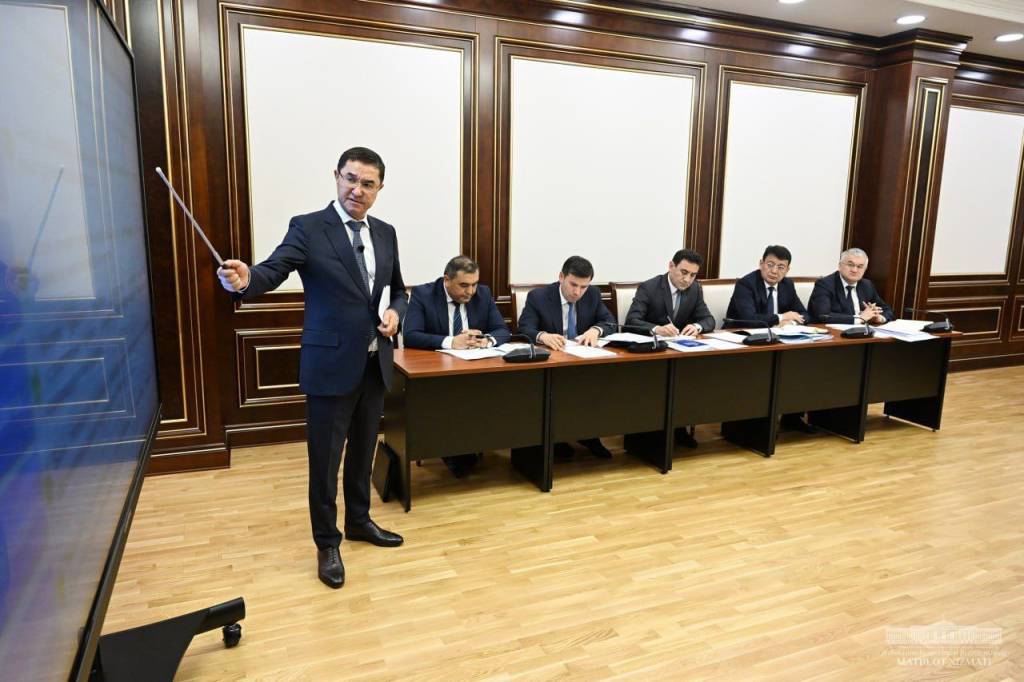
To ensure a 15 percent increase in the service sector, it is necessary to take full advantage of the untapped potential in transport, logistics, agricultural services, insurance, and leasing.
The Head of state underscored the need to intensify the ongoing reforms in transport, water and communal services and to pay special attention to supporting the population and business.
UzA