

Energy Fuels’ acquisition of Australian Strategic Materials on 28 August marks a major step in its effort to build a rare earth supply chain outside China. The deal adds the operating Korean Metals Plant in Ochang, South Korea, the Dubbo project in Australia, and metallisation technology that could later support a planned US facility. Rare earth security depends on much more than owning a mine. Ore must be processed, separated into individual oxides, converted into metals and alloys, and ultimately manufactured into permanent magnets. China’s strength comes from controlling almost every stage.
ASM Fills the Midstream Gap
The Korean Metals Plant is the most immediate industrial asset acquired through ASM. It can currently produce about 1,300 tonnes of neodymium-iron-boron alloy per year, with expansion planned to raise capacity to 3,600 tonnes by the end of 2026. This matters because alloy production remains one of the weakest links in non-Chinese rare earth supply chains.
Energy Fuels already has oxide-processing capability at its White Mesa Mill in Utah, where the current line is designed for roughly 1,000 tonnes of neodymium-praseodymium oxide annually. The next phase is intended to lift that capacity above 6,000 tonnes and add commercial separation of dysprosium and terbium. Yet much of this expansion remains under development, so planned capacity should not be confused with current production.
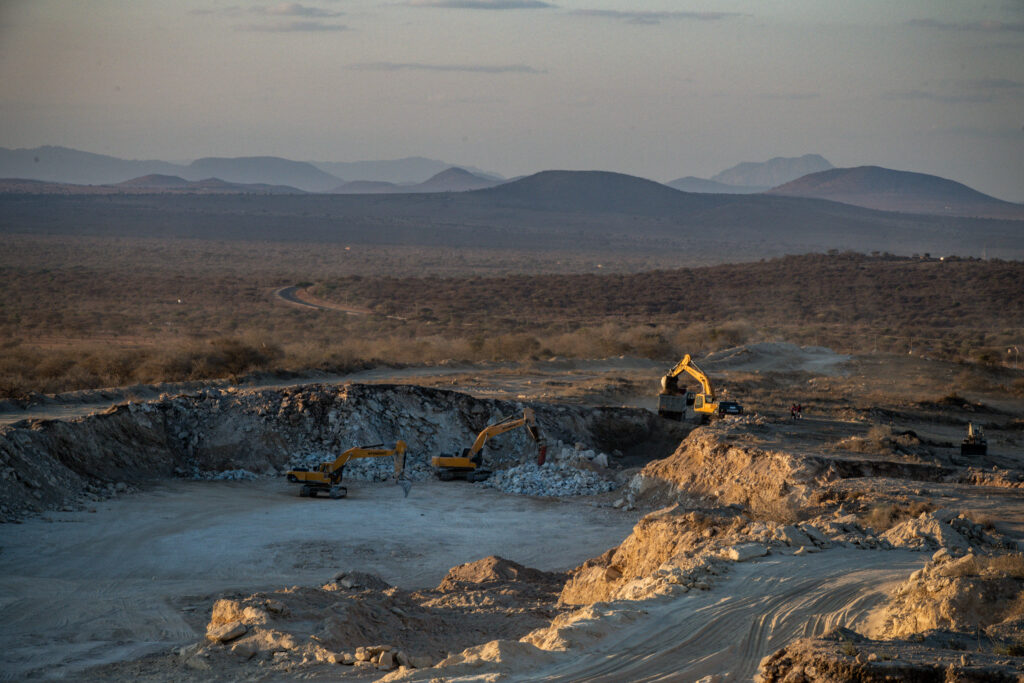
ASM also brings the Dubbo project in New South Wales, which contains rare earth elements alongside zirconium, hafnium and niobium. However, Dubbo remains a development project rather than an operating mine. It still requires financing, a final investment decision and construction. This highlights the central challenge: the company is assembling assets across the value chain, but those assets are at very different levels of maturity. Some already produce commercial material. Others are expanding. Several still depend on funding and major capital expenditure.
VAC Could Complete the Chain
ASM takes Energy Fuels from separated oxides into metals and alloys, but not yet into finished magnets. That final stage is expected to come from Vacuumschmelze, or VAC. In June, Energy Fuels agreed to acquire the German magnet producer in a transaction valued at about $1.9 billion. VAC would add magnet-manufacturing technology and a US plant in Sumter, South Carolina, with capacity of roughly 2,000 tonnes of permanent magnets per year.
If the transaction closes, Energy Fuels could participate in every major stage from feedstock and separation to alloying and finished magnets for automotive, defence, electronics and industrial applications. Moving downstream could increase the company’s share of value added, but it would also raise requirements for quality, certification, traceability and delivery reliability.
Capital and Policy Will Matter
The planned White Mesa expansion carries estimated initial capital costs of about $410 million. Energy Fuels has also received a conditional offer of a $725 million long-term US government loan to support processing expansion in Utah and a future American metals and alloys plant. At the end of June, the company reported about $996 million of working capital, although only around $58 million was held in cash and cash equivalents. At the same time, the proposed VAC acquisition includes roughly $718 million in cash plus more than 65 million new Energy Fuels shares. The company is therefore trying to finance acquisitions, mine development and industrial expansion simultaneously.
Government support is becoming increasingly important because Western projects must compete with a Chinese industry that benefits from scale, established supplier networks and deep processing capacity. China accounted for about 94% of global sintered permanent magnet production in 2024 and around 90% of rare earth refining and separation. Demand for magnet rare earths exceeded 90,000 tonnes in 2024, but strong demand alone does not guarantee attractive economics for new entrants. Lower prices or delayed ramp-up can weaken project returns before new plants reach efficient utilisation.
Execution Will Decide the Outcome
Energy Fuels now has a credible blueprint for a diversified rare earth platform. ASM adds operating alloy capacity. White Mesa provides a US processing base. Projects in Australia, Brazil and Madagascar could supply future feedstock. VAC, if acquired, would add finished magnet manufacturing. Together, these assets could create one of the few non-Chinese supply chains spanning raw materials, separated oxides, metals, alloys and permanent magnets.
The remaining question is whether the company can make these assets operate as one system quickly enough. Delays at a mine can restrict feedstock. Delays in separation can constrain alloy output. Quality issues at the alloy stage can interrupt magnet production. Vertical integration increases control, but it also concentrates responsibility. The ASM acquisition moves Energy Fuels materially closer to a mine-to-magnet model. Its strategic value will only be proven when planned capacity becomes dependable production, customers commit to long-term volumes, and the chain can compete through normal market cycles rather than only under favourable prices or government support.