

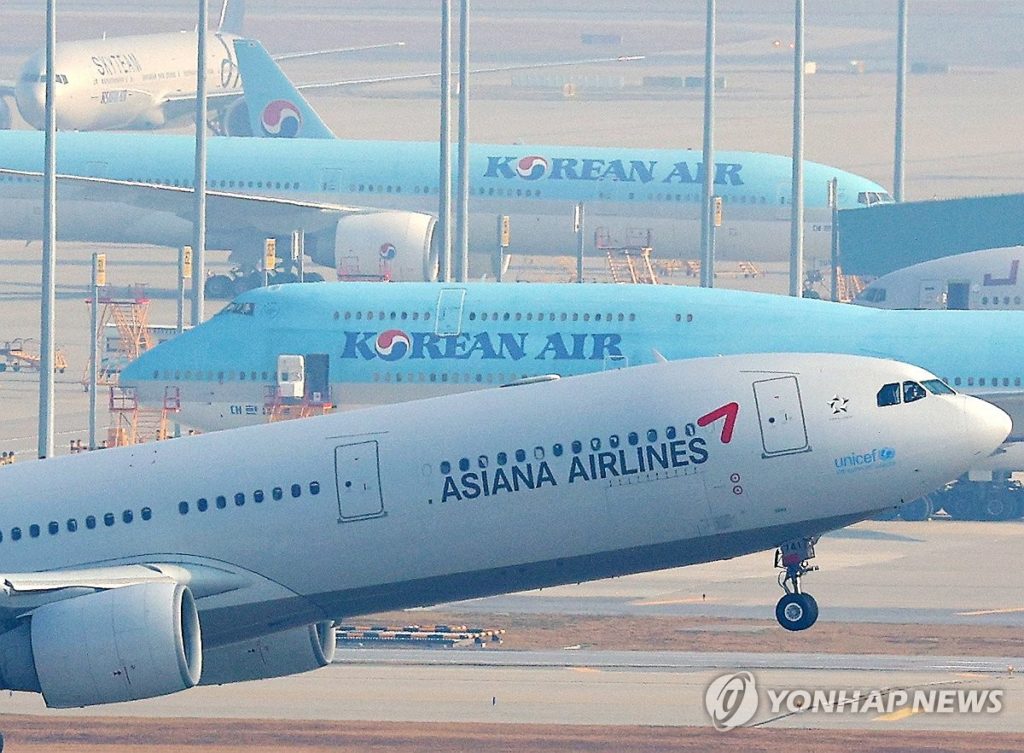
(ATTN: ADDS statement from Asiana, share prices in 15-16, 22)
By Chang Dong-woo
SEOUL, Oct. 31 (Yonhap) — Despite the South Korean government’s announcement nearly three years ago, the potential combination of Korean Air Co. and Asiana Airlines Inc., the nation’s two full-service carriers, is still facing a difficult challenge in obtaining regulatory acceptance in key markets.
In November 2020, Korean Air signed a contract to obtain the majority stake in Asiana in a deal valued at 1.8 trillion won (US$1.34 billion) that would create the world’s 10th-biggest airline by fleet.
Korean Air must get approval from competition regulators in key markets in order to finalize the takeover of the smaller rival.
It has been granted approval in 11 countries, including Britain, Australia and Singapore, but has yet to receive approval from three significant markets: the European Union, the United States and Japan.
Right now, the companies are focusing on responding to problems raised by the European Commission (EC), the EU’s executive body.
The EC informed Korean Air in May that the deal may restrict competition in the markets for passenger and cargo air transport services between the EU and South Korea.
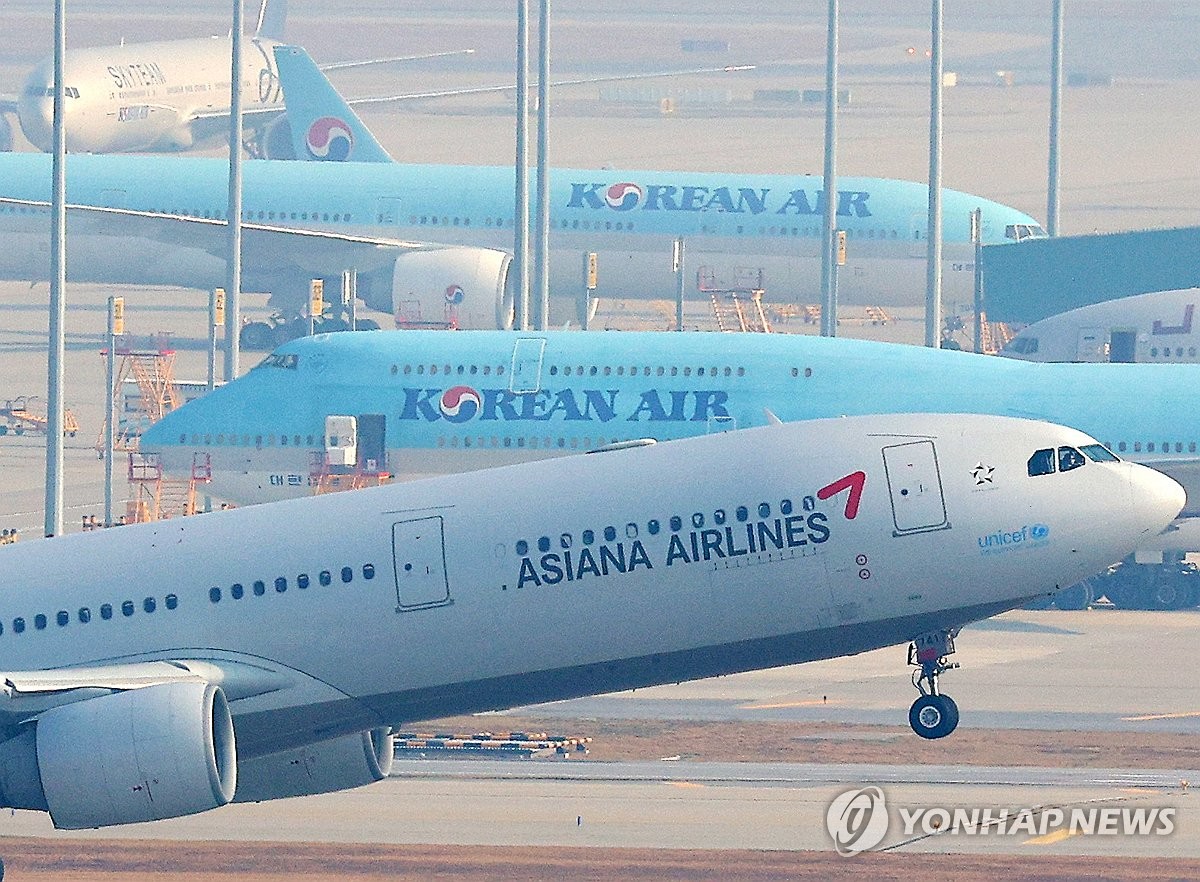
An Asiana Airlines aircraft takes off at Incheon International Airport, west of Seoul, on Oct. 30, 2023. (Yonhap)
In response, Korean Air has come up with a plan to sell Asiana’s cargo business should the EC approve the merger. But Asiana’s board of directors, which discussed the matter Monday, failed to reach a decision.
During Monday’s marathon meeting, Asiana’s five board directors — one internal and four outside — reportedly engaged in a heated debate about whether the cargo business sale could potentially constitute a breach of trust, questioning if such a move would outweigh the benefits of retaining the division.
The board was originally comprised of six members, but one of Asiana’s two internal directors, who was reportedly against the cargo business sale, resigned before the meeting.
Asiana’s union and several of its former CEOs have also expressed opposition to the cargo business sale.
Korean Air had initially planned to submit formal remedies, including the plan to sell Asiana’s cargo business, by the end of the month. It is now expected to be delayed to early November. Remedies will also reportedly include a plan to divest passenger flight routes to four European cities.
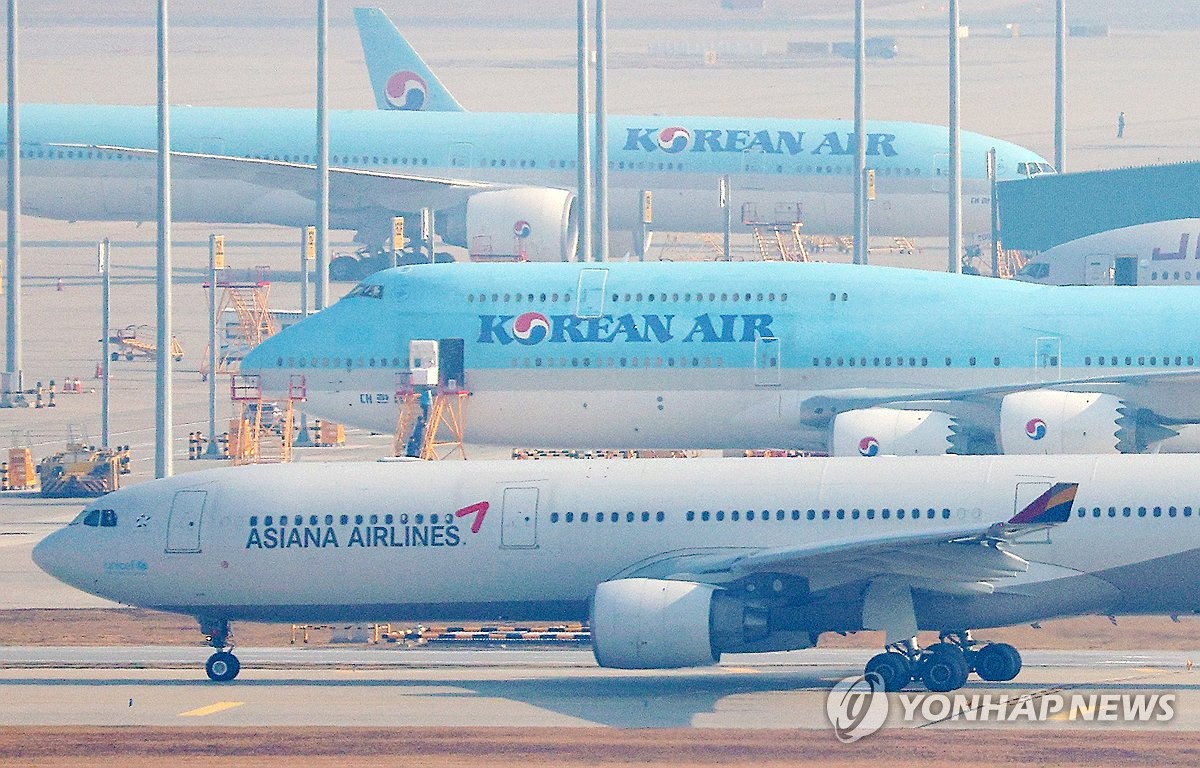
Aircrafts of Korean Air and Asiana Airlines are parked at Incheon International Airport, west of Seoul, on Oct. 30, 2023. (Yonhap)
“We are not able to submit the remedies to the EC by the end of October. Korean Air will decide on the new remedy submission date according to the decision of Asiana Airlines’ board of directors,” a Korean Air representative said in a statement sent to Yonhap News Agency.
Asiana’s board of directors reportedly plans to hold a follow-up meeting Thursday.
In a statement sent to Yonhap, an Asiana official said the company has internally carried out “discussions on all topics related to the stable employment of all employees at Asiana Airlines and its subsidiaries, and those of enhancing corporate and shareholder value.”
“This involved multiple discussions covering various aspects, including the sharing of opinions through meetings involving Asiana Airlines’ executives and labor union,” the official added.
Even if the board decides to approve the cargo business sale, an immediate approval of the merger by the EC is not guaranteed, but the chances of obtaining a conditional approval are expected to increase.
A rejection, on the contrary, could dampen the prospects of the merger deal.
In the U.S., Korean Air could potentially face a much tougher battle, as the news outlet Politico reported in May that the U.S. Department of Justice is considering suing to block the deal due to competition reasons.
In light of the development, Korean Air is reportedly engaging heavily in lobbying efforts in the U.S.
According to Open Secrets, a U.S. nonprofit organization that tracks data on campaign finance and lobbying, Korean Air has spent $520,000 on lobbying efforts in the U.S. since the start of 2022 in order to win approval for the merger in the country.
Shares of Korean Air rose 3.02 percent to 20,500 won while those of Asiana Airlines surged 8.04 percent to 11,150 won Tuesday, outperforming the broader KOSPI’s 1.41 percent loss for the day.
odissy@yna.co.kr
(END)
Related Articles (LEAD) Asiana Airlines union protests Korean Air merger ahead of decision on cargo business’s fate (3rd LD) Asiana Airlines fails to conclude cargo biz sell-off; another board meeting eyed Asiana Airlines to decide on sale of cargo biz to win EU approval for Korean Air’s takeover: sources