

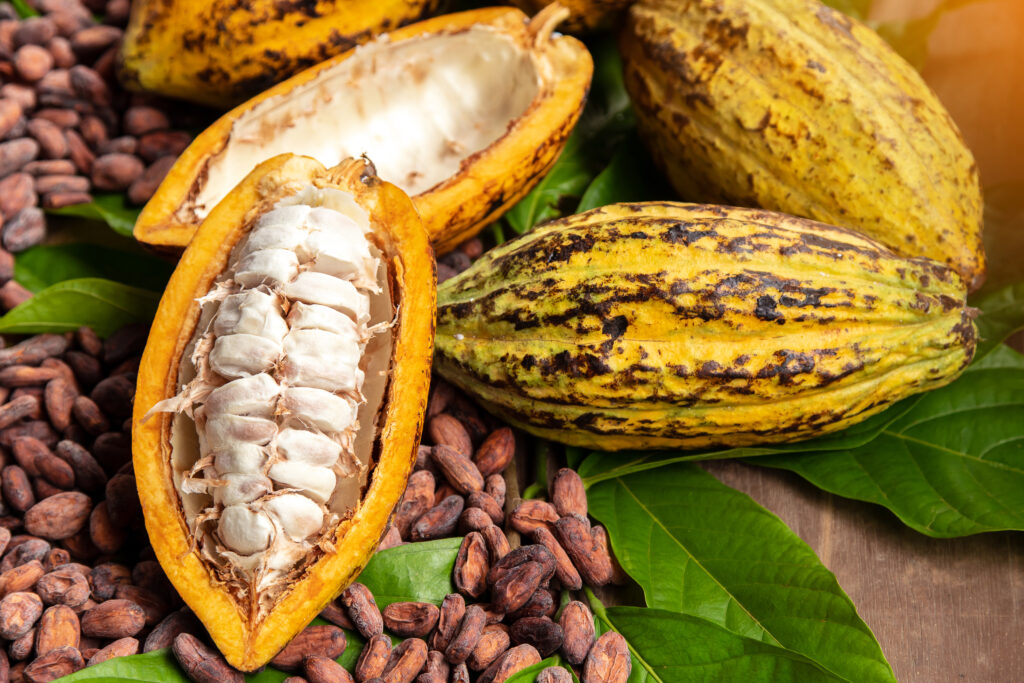
The cocoa market has changed faster than most food commodity markets usually do. In 2024, cocoa prices surged above $12,000 per tonne, reaching record levels and forcing chocolate producers to rethink almost every part of their strategy.
By spring 2026, the picture had reversed. Cocoa futures had fallen by almost 70% from their peak. Earlier in 2026, prices had already dropped to around $3,100 per tonne, losing roughly half their value from the start of the year.
This is not just a story about cheaper chocolate. It is a story about how global food markets react to extreme price volatility.
From Premium Chocolate to Flexible Recipes
When cocoa became extremely expensive, manufacturers had to protect margins. They reduced bar sizes. They added more wafers, nuts, fruit fillings, and alternative ingredients. Some products moved away from traditional chocolate recipes toward more flexible “chocolate candy” formats.
This was a rational response to a severe raw material shock. Cocoa mass and cocoa butter are expensive inputs. When their cost rises sharply, every gram matters.
Now, as cocoa prices fall, some major producers are starting to move back toward more traditional chocolate recipes. Hershey has already indicated that products under Hershey’s and Reese’s will return to original recipes from next year. Barry Callebaut has also noted that some customers are returning to standard chocolate formats.
For consumers, this may eventually mean better product quality. For producers, it creates a chance to rebuild volumes after a period of price increases and recipe adjustments.
Why Prices Fell So Sharply
The collapse in cocoa prices reflects both weaker demand and improving supply.
High prices changed consumer behaviour. When chocolate became more expensive and products became smaller or less cocoa-rich, buyers started to reduce purchases. As a result, cocoa demand weakened. Current-season demand may fall to its lowest level in nine years.
At the same time, the supply picture improved. Better weather and stronger crop expectations reduced fears of a long-term shortage. Traders now expect the global cocoa market in the 2025/26 season to move into a surplus of around 300,000–400,000 tonnes.
This combination changed the mood of the market. The same industry that had been preparing for scarcity began to face the opposite problem: excess supply, slower demand, and falling prices.
Why Chocolate Prices Will Not Fall Immediately
For consumers, the key question is simple: if cocoa prices have fallen, why is chocolate still expensive?
The answer lies in the structure of the supply chain.
The effect of futures prices can take around 10 months to reach retail shelves. Large manufacturers buy and hedge cocoa months in advance. They also hold inventories. This means a chocolate bar sold today may still be made from cocoa purchased when prices were much higher.
There is also a commercial reason for delay. During the price shock, companies absorbed higher costs, changed packaging, adjusted recipes, and renegotiated contracts. As prices fall, many will first try to restore profitability before passing savings to consumers.
Some price relief is already visible in parts of Europe, where selective reductions have supported sales volumes. But this is likely to be gradual, not immediate.
The Pressure on Cocoa-Producing Countries
Lower cocoa prices are not good news for everyone.
For Côte d’Ivoire and Ghana, cocoa is a major source of export income. Together, they account for roughly half of global cocoa production. Cocoa represents almost 40% of Côte d’Ivoire’s export revenue and nearly 15% of Ghana’s export revenue.
When prices fall quickly, these countries face pressure on foreign currency earnings, public finances, and farmer incomes. Their systems also rely heavily on forward sales and fixed farmer prices. This structure can protect farmers during some periods, but it becomes difficult when global market prices fall below expected levels.
Traders become less willing to buy at old terms. Unsold stocks rise. Farmers may wait longer for payment. The burden shifts toward the weakest part of the chain.
Large chocolate brands have hedging tools, pricing power, and diversified product portfolios. Farmers have fewer options.
Regulation Is Becoming More Important
The cocoa market is also becoming a regulatory issue.
Brazil has introduced a rule requiring products sold as dark chocolate to contain at least 35% cocoa solids. This reflects a wider trend. Governments are paying more attention to what companies sell under familiar product names.
This matters because high cocoa prices encouraged recipe flexibility. If regulation becomes stricter, companies may have less room to reduce cocoa content while still using traditional chocolate labels.
For investors and producers, this creates a new balancing act. Future margins will depend not only on cocoa prices, but also on product quality, labelling rules, consumer trust, and pricing discipline.
The Main Market Lesson
The cocoa correction shows that commodity markets move faster than supply chains.
A futures price can collapse in weeks. A factory recipe changes more slowly. Retail prices move even later. Farmers and exporting countries may feel the pain before consumers see any benefit.
For the chocolate industry, the next stage will be about balance. Producers must restore volumes without destroying margins. Retailers will push for better terms. Consumers will expect better value. Exporting countries will need to manage lower revenue and protect farmer incomes.
The return of “real chocolate” is only one part of the story.
The larger question is who captures the value when a global food market normalises — and who pays the cost first.