

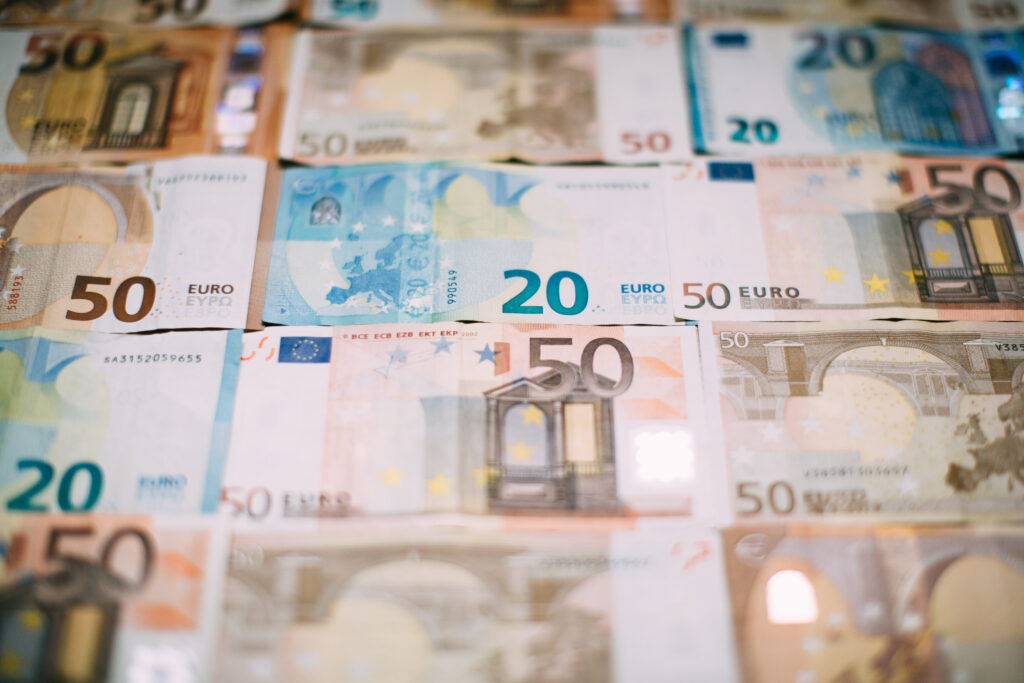
The euro has fallen to its weakest level in more than a year against the US dollar, highlighting a rapid shift in investor expectations around European monetary policy, energy markets, and economic growth. The single currency has declined by 2.6% this month, reaching $1.135, its lowest level since early June 2025. This marks a sharp reversal from expectations earlier in the year, when several Wall Street analysts projected that the euro could climb toward $1.20 as investors reduced exposure to the dollar.
The latest move is not only a currency story. It reflects a broader reassessment of the Eurozone’s economic outlook. Markets are now weighing two forces at once: lower energy prices, which reduce inflation pressure, and weaker economic data, which limits the European Central Bank’s room for additional rate rises. For businesses, investors, and analysts, this creates a more complex environment where currency movements are increasingly tied to energy security, central bank strategy, and growth resilience.
Oil Prices Change the Inflation Outlook
A key driver behind the euro’s decline is the easing of oil prices after the US-Iran agreement to restore oil flows through the Strait of Hormuz. Earlier energy market disruption had increased inflation risks and pushed the ECB to raise borrowing costs. For the Eurozone, which depends heavily on imported energy, higher oil prices can quickly affect production costs, consumer prices, and industrial competitiveness.
As oil prices fall, the risk of a severe inflation shock has become less immediate. This reduces pressure on the ECB to continue tightening monetary policy aggressively. Lower energy costs may help ease headline inflation, especially after euro area inflation stood above 3% in May. Some analysts now expect inflation to move closer to the ECB’s 2% target by the end of 2027, provided energy inflation continues to decline and wage pressures remain contained.
This change matters for market expectations. Traders are still pricing in one quarter-point rate rise from the ECB by the end of the year. However, the probability of a second increase has dropped sharply, from 50% to 20% based on swaps market pricing. This shows that investors increasingly see the ECB as close to the end of its current tightening cycle.
Growth Data Adds Pressure
The euro’s weakness also reflects concerns about economic momentum. Recent purchasing managers’ indices for the euro area showed a contraction in activity, suggesting that the previous period of elevated energy prices has already affected output. A slower economy gives the ECB less flexibility. Raising rates further could help contain inflation, but it could also deepen the slowdown in industries already facing higher costs and weaker demand.
This is particularly important for industrial and export-oriented companies. A weaker euro can support exporters by making European goods more competitive abroad. However, it can also raise the cost of imported goods and inputs, especially for companies dependent on dollar-priced commodities. For strategic planners, the current situation requires careful monitoring of both currency trends and input cost structures.
The Dollar Regains Momentum
The euro’s larger decline against the dollar also reflects renewed strength in the US currency. The dollar has benefited from expectations that the Federal Reserve will continue taking a firm approach to inflation, which has risen above 4% in the United States. A more hawkish Fed makes dollar-denominated assets more attractive, especially when the US economy continues to show resilience.
This policy divergence is central to the currency move. While the ECB faces weaker growth and easing energy inflation, the Fed is dealing with stronger inflation pressure and a more durable economic backdrop. As a result, investors are again increasing bullish dollar positions. The euro has also slipped 0.4% against sterling this month, touching its lowest level since last August, but the move against the dollar has been more pronounced because of the broad-based recovery in the greenback.
Strategic Implications for Businesses and Investors
The euro’s fall underlines the importance of linking currency analysis with macroeconomic fundamentals. Exchange rates are not moving in isolation. They are responding to changes in energy flows, inflation expectations, interest rate pricing, and relative economic strength. JPMorgan has already lowered its euro target from $1.13 to $1.10, citing a mix of stabilising growth, persistent inflation, and renewed confidence in the US economy.
For businesses operating in or with the Eurozone, this environment creates both risks and opportunities. Importers may face higher costs if the euro remains weak against the dollar. Exporters may benefit from improved price competitiveness in global markets. Investors need to assess whether the euro’s decline is temporary or part of a broader adjustment to slower European growth and stronger US policy momentum.
The central question is whether lower oil prices will be enough to stabilise the Eurozone without forcing the ECB into further aggressive rate rises. If inflation continues to ease and growth remains weak, the ECB may adopt a more cautious stance. For now, the euro’s decline shows that markets are already preparing for a softer European policy path and a stronger role for the dollar in global portfolios.