

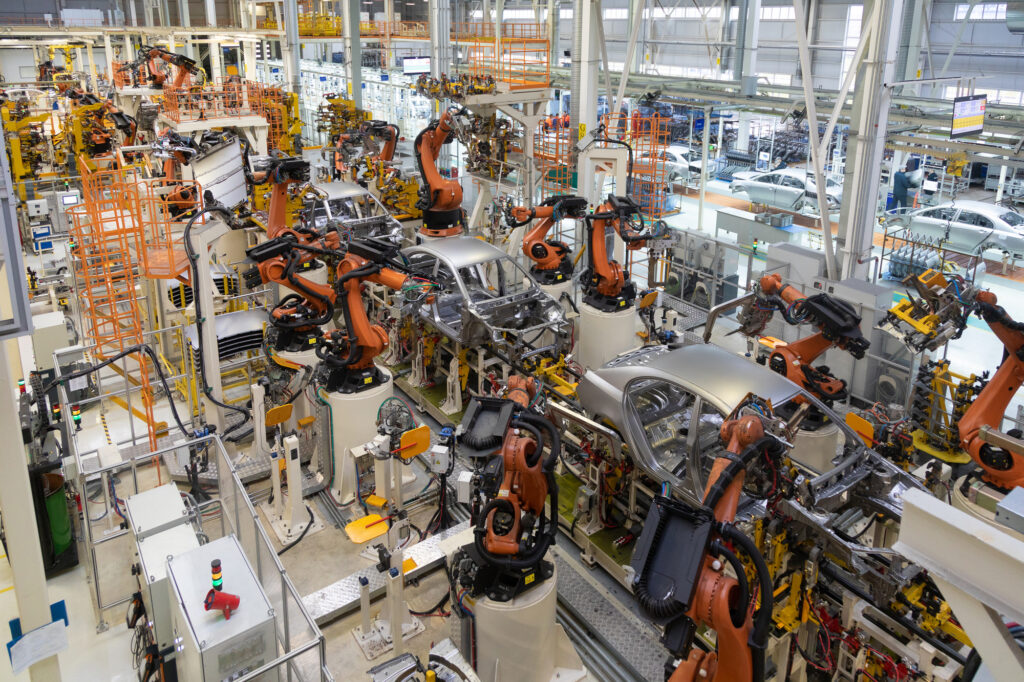
China is moving into a new stage of industrial transformation. The driver is not only technological ambition. It is also demographic pressure. The country’s working-age population, aged 15 to 64, peaked at around 1 billion in the last decade. By 2100, it is projected to fall to about 300 million. This shift creates a structural challenge for manufacturing, logistics, services, and long-term economic growth.
Beijing’s answer is increasingly clear. China wants robots, artificial intelligence, and human-machine collaboration to compensate for a shrinking workforce. This is not a narrow industrial experiment. It is becoming a national strategy that combines demographic policy, manufacturing competitiveness, export ambitions, and technological self-reliance.
Automation Moves from Factory Floors to National Strategy
China already has the world’s largest industrial robotics market. Between 2021 and 2024, the number of robots installed in Chinese factories doubled to around 2 million units. In 2024, China installed more industrial robots than the rest of the world combined. The domestic robotics industry is also gaining strength. Locally produced robots accounted for 30% of new installations in 2020. By 2024, their share had risen to 57%.
This matters for business planning across Asia. China is not only adopting automation. It is building the supply chain behind it. Components, sensors, software, machine vision, robotic arms, humanoid platforms, and AI training systems are becoming part of a larger industrial ecosystem.
Policy support is accelerating this trend. China has announced a RMB 1 trillion fund over 20 years for advanced technologies, including robotics. Authorities are also encouraging the use of embodied AI in manufacturing, logistics, retail, and healthcare. The target is to place at least 10,000 AI-powered robots in commercial environments this year.
Humanoids Are the Next Frontier, but Not Yet the Final Answer
Humanoid robots are attracting major attention. China reportedly accounted for around 90% of the 13,000 to 16,000 humanoid robots shipped globally last year. Sales of Chinese humanoids are expected to reach about 50,000 units this year, placing the country ahead of other markets.
The business case is still developing. Humanoids are not always the best tool for simple repetitive tasks. Traditional industrial robots can often perform those jobs faster and cheaper. At the same time, complex environments such as private homes remain difficult for humanoids to navigate.
The strongest near-term opportunities are likely in controlled industrial settings. These include precision screw-driving, glue application, sorting, inspection, garment production, and tasks that require human-like movement but can be standardised. Dangerous, unpleasant, or physically demanding jobs may also be early areas of adoption.
However, the data challenge is significant. Humanoid robots need large volumes of training data to learn human movements, physical resistance, object handling, and real-time decision-making. Some companies are already collecting this data through wearable kits used by human workers. This creates a new layer of value in the robotics market: not only machines, but also training data, software, and task-specific capabilities.
Services Are Also Becoming Automated
The automation wave is not limited to manufacturing. China’s hotel, logistics, retail, and delivery sectors are also adopting robots. In the hotel industry, self-service terminals, delivery robots, cleaning robots, and automated luggage handling are reducing staffing needs. One large hotel operator has introduced automation across more than 3,200 hotels. Its staff-to-room ratio has reportedly fallen to 0.1, meaning a 100-room hotel may operate with about 10 employees. Traditional economy hotels often require 30 to 80 workers per 100 rooms.
This signals a deeper shift. Services were once expected to absorb workers leaving factories. Yet automation is now entering services as well. For investors and consultants, this changes assumptions about employment, productivity, cost structures, and consumer-facing operations.
The Employment Risk Is Strategic
China’s automation push creates a clear productivity opportunity. It also creates a labour-market risk. The country already has around 320 million gig workers. Many include young graduates and migrant workers affected by slower property growth, weaker household confidence, and changing demand.
If robots replace jobs faster than demographic decline reduces the labour force, social pressure could rise. Delivery, taxi services, hotels, manufacturing, quality inspection, and warehouse operations are all exposed. One major ecommerce company has warned that robots may eventually replace hundreds of thousands of delivery workers, while also working with schools to retrain staff for robot maintenance and repair roles.
Some new jobs are already emerging. Nine Chinese universities have launched undergraduate programmes in embodied AI. Large technology and manufacturing groups are hiring talent in robotics, AI systems, hardware maintenance, and applied automation. The question is whether new employment categories can scale quickly enough.
What This Means for Business
For industrial companies, China’s robot strategy is a signal to reassess competitiveness. Labour-cost advantages may become less decisive. Productivity, automation readiness, data quality, and integration capabilities may matter more.
For suppliers, the opportunity is broad. Demand may increase for sensors, precision parts, batteries, motion-control systems, AI chips, robotic hands, data-collection tools, and industrial software. For investors, the market is promising but uneven. Some areas, such as factory automation and quality inspection, have clearer commercial use cases. Humanoids may require a longer time horizon.
China’s demographic challenge is becoming a technology catalyst. The country is not simply preparing for fewer workers. It is trying to redesign how work is performed. For businesses across Asia, this shift deserves close attention. It may define the next stage of manufacturing strategy, service productivity, and regional competition.