

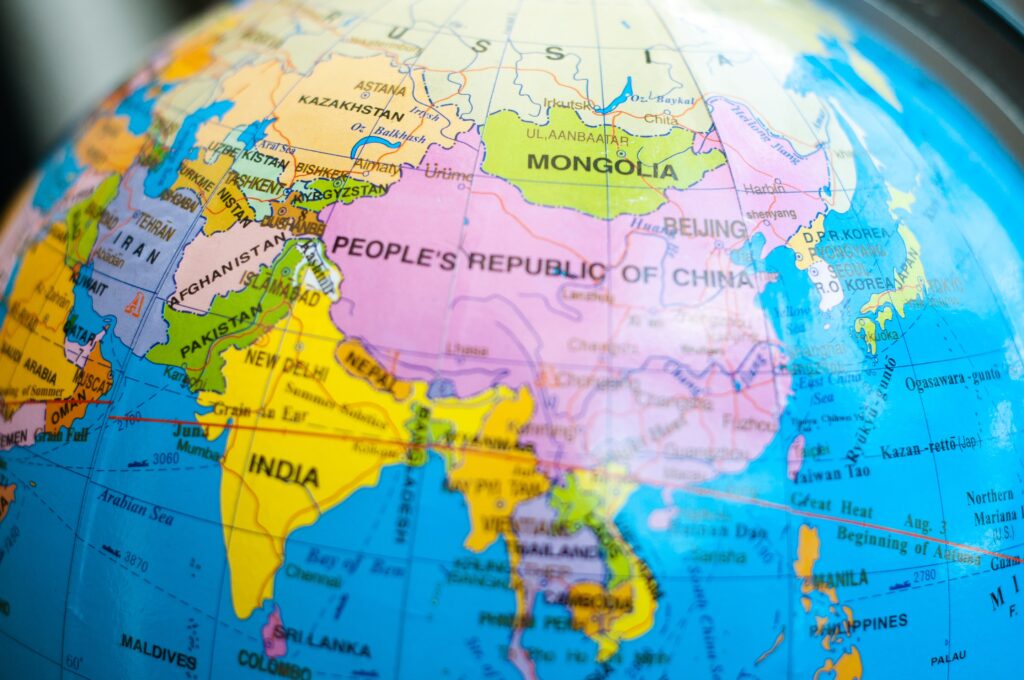
Global supply chains are no longer built around cost alone. They are now built around resilience, access, speed, and geopolitical risk. This is changing the investment map of Asia.
China remains central to global manufacturing. It has scale, infrastructure, supplier depth, and decades of production experience. Yet the risk equation has changed. Trade tensions, tariffs, export controls, and strategic competition have made overdependence on one manufacturing base harder to justify.
The numbers show the scale of the shift. UNCTAD reported that foreign direct investment to China fell by 29% in 2024. At the same time, ASEAN remained one of the strongest investment destinations in the developing world. FDI inflows to the bloc reached about $225–226 billion in 2024, rising by roughly 8–10% despite weaker global investment conditions.
China Plus One Becomes a Long-Term Strategy
The “China Plus One” model is not about leaving China completely. For many multinationals, that would be unrealistic. China is still too large, too efficient, and too integrated into global trade.
The strategy is about reducing exposure. Companies want a second production base. They want optionality. They want a way to serve global markets without placing all operational risk in one country.
This is where Southeast Asia has become highly attractive. The region has nearly 700 million people, rising industrial capacity, improving infrastructure, and proximity to China’s supplier networks. It also offers a wide range of advantages across different countries, from electronics and semiconductors to electric vehicles, logistics, finance, and digital services.
But the benefits are not evenly distributed. Some countries are winning because they offer scale. Others are winning because they offer specialization. The real investment race is not only about who receives the most capital. It is about who receives the most strategic capital.
Singapore Leads in Capital, But Not in Factories
Singapore remains the region’s largest FDI recipient. In 2024, it accounted for about 63% of ASEAN’s total FDI inflows, followed by Indonesia and Vietnam. Much of Singapore’s strength comes from finance, insurance, regional headquarters, asset management, and high-value services.
This makes Singapore a clear winner in the de-risking race, but in a specific role. It is the command centre of ASEAN investment. It hosts capital, decision-making, legal structures, and regional management functions.
However, Singapore is not the main destination for large-scale manufacturing relocation. Land, labour, and energy constraints limit its industrial role. As supply chains diversify, Singapore benefits as the strategic hub, while production often moves to neighbouring economies.
Vietnam Wins on Manufacturing Momentum
Vietnam is one of the clearest winners of China Plus One. It has become a preferred destination for electronics, garments, furniture, machinery, and increasingly semiconductors.
The country benefits from competitive labour costs, multiple free trade agreements, export-oriented industrial zones, and strong links with Asian manufacturing networks. FDI firms play a major role in its export economy. In electronics, foreign-invested companies account for around 98% of Vietnam’s electronics exports, which reached $126.5 billion in 2024.
Vietnam’s challenge is the next stage of development. It must move from assembly to higher-value production. That requires stronger local suppliers, better technical training, deeper research capacity, and more domestic participation in global value chains.
Malaysia Gains from Semiconductors and Data Centres
Malaysia is another major beneficiary, especially in semiconductors, electronics, and data centres. Its long-established role in chip assembly, testing, and packaging gives it a strong foundation.
The country accounts for around 7% of global semiconductor assembly, testing, and packaging capacity, making it one of the most important players in this segment. It also benefits from the global semiconductor cycle and from companies looking for politically safer and operationally reliable production locations.
Malaysia’s opportunity is to move up the value chain. Advanced packaging, chip design support, green energy infrastructure, and data centre expansion could strengthen its position. But it will need to manage talent shortages, power demand, and regional competition.
Indonesia Wins on Scale and Resources
Indonesia offers something different: scale. It has the largest population and economy in Southeast Asia, a large domestic market, and major natural resources. These strengths make it attractive for electric vehicles, batteries, nickel processing, consumer goods, and infrastructure-linked investment.
In 2024, Indonesia was the second-largest FDI recipient in ASEAN after Singapore, with around 11% of the bloc’s total inflows.
Its advantage is long-term industrial depth. Its challenge is execution. Investors will watch regulatory consistency, infrastructure quality, permitting speed, and the ability to convert resource wealth into higher-value manufacturing.
Thailand Remains a Strong Industrial Base
Thailand is not new to manufacturing. It has deep experience in automotive production, electronics, food processing, and industrial supply chains. This gives it an advantage in reliability and supplier maturity.
Its role in the de-risking race is less about sudden relocation and more about upgrading. Electric vehicles, smart manufacturing, logistics, and higher-value industrial production could support its next investment cycle.
Thailand’s challenge is demographic pressure and competition from faster-growing neighbours. To stay ahead, it needs to strengthen innovation, workforce productivity, and next-generation industrial policy.
The Real Winner Is a Regional Network
There may be no single winner in Southeast Asia’s de-risking race. The stronger answer is that ASEAN is winning as a network.
Singapore manages capital. Vietnam absorbs export manufacturing. Malaysia strengthens semiconductor and digital infrastructure. Indonesia provides scale and resources. Thailand offers established industrial capacity.
This is why Southeast Asia is becoming more than a backup to China. It is becoming a diversified production and investment system in its own right.
For investors and companies, the key lesson is clear. De-risking is not only about moving away from China. It is about choosing the right combination of markets, sectors, infrastructure, and policy environments. The countries that can offer stability, skilled labour, supply chain depth, and predictable regulation will capture the next wave of strategic capital.