

(ATTN: RECASTS headline, lead with more details; ADDS more info, comments throughout, byline)
By Oh Seok-min
SEOUL, Nov. 2 (Yonhap) — South Korea’s inflation rate increased at a faster rate in October, remaining above 3 percent for the third consecutive month due to higher prices of energy and agricultural products, data revealed Thursday.
Consumer prices, a key gauge of inflation, rose 3.8 percent year-on-year in October, up from 3.7 percent the previous month, according to the report from Statistics Korea.
It is the third month in a row that annual price growth has accelerated, though inflation has generally been moderating in recent times.
The year-on-year price growth dropped below 4 percent in April for the first time in more than a year and had been steadily decreasing to reach a 25-month low of 2.3 percent in July.
However, the rate rose to 3.4 percent in August and further to 3.7 percent the following month due to high oil and farm products prices.
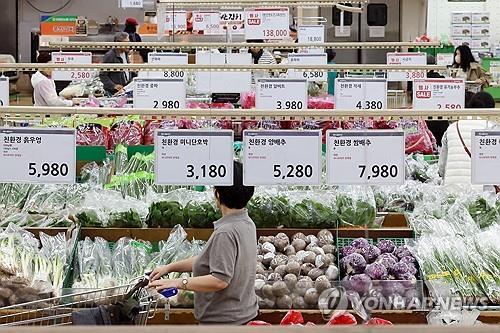
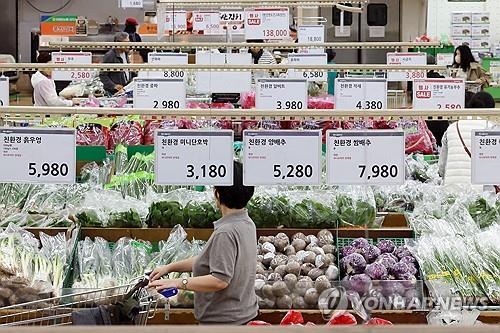
People shop at a discount store in Seoul, in this file photo dated Oct. 5, 2023. (Yonhap)
Core inflation, which omits volatile food and energy prices, rose 3.6 percent year-on-year in October, slowing from the previous month’s 3.8 percent growth.
Prices of daily necessities — 144 items closely related to people’s everyday lives, such as food, clothing and housing — increased 4.6 percent year-on-year in October, accelerating from a 4.4 percent rise the month before.
In detail, prices of agricultural, livestock and fishery products jumped 7.3 percent last month, with those of vegetables surging 13.5 percent, the most in 29 months.
Utility services reported a 9.6 percent year-on-year price increase in October due to rising global energy prices. South Korea relies heavily on imports for its energy needs.
Prices of industrial products added 3.5 percent last month, compared with 3.4 percent in September, mainly due to higher gasoline and clothing costs.
Costs of gasoline rose 6.9 percent, while those of diesel fell 7.9 percent, the data showed.
The service sector also reported a 3 percent year-on-year advance in prices last month on higher insurance and house management costs.
“Inflation is expected to ease at a slower pace than expected due to geopolitical risks from the Middle East, abnormal weather conditions and other factors,” Finance Minister Choo Kyung-ho said.
“The government will prioritize the stabilization of prices and activate a special scheme involving all relevant ministries,” he added.
The Bank of Korea (BOK) has said that inflationary pressure is expected to stay over 3 percent through the end of this year, higher than its target rate of 2 percent.
Last month, the central bank held its key interest rate steady at 3.5 percent amid high household debts, an economic slowdown and heightened external uncertainties.
The rate freezes came after the BOK delivered seven consecutive rate hikes from April 2022 through January 2023.

This file photo shows gas prices at a filling station in Seoul on Oct. 9, 2023, as prices have risen sharply following the conflict between Israel and Hamas. (Yonhap)
graceoh@yna.co.kr
(END)
Related Articles (LEAD) Consumer sentiment slides for 3rd month in October amid slowdown woes (LEAD) Korean economy set for mild recovery, but bumpy road still ahead: BOK (LEAD) Israel-Hamas war feared to push up inflation, affect broader economy: finance minister