

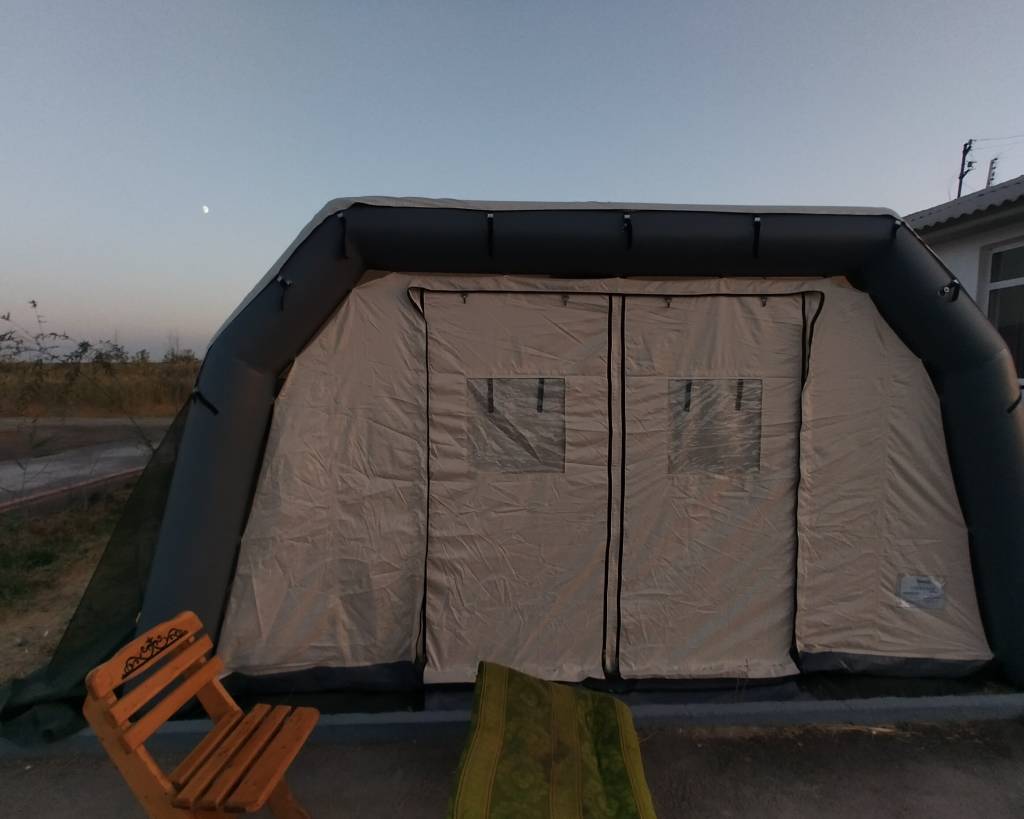
In September 2023, specialists from the Bundeswehr Institute of Microbiology (IMB) traveled to the Republic of Uzbekistan to conduct two training workshops as part of the German Foreign Office’s Biosecurity Programme. This builds on a past project supported by the European Union’s Chemical, Biological, Radiological and Nuclear Centres of Excellence (EU CBRN CoE) Initiative, which saw two mobile labs for diagnosing contagious pathogens being provided to the Uzbek Ministry of Public Health in 2020, with Uzbek experts being trained in mobile diagnostics from 2020-2022.
The IMB experts first held a 5-day workshop at the Republican Specialized Scientific and Practical Medical Center for Epidemiology, Microbiology, Infectious and Parasitic Diseases (RSSPMCEMIPD). This workshop focused on teaching PCR diagnostics of infections in different specimens, such as blood, swab and urine, and troubleshooting in the event of implausible results. Additional Uzbek scientists were added to the mobile diagnostics team.
The IMB experts then took a field study trip to Sirdarya region with Uzbek colleagues from the Research Institute of Virology (RIV) to practice the mobile laboratory’s integration into the institute’s field activities. This was followed by a 2-day follow-up workshop hosted by RSSPMCEMIPD.
In the current phase of the German Biosecurity Programme, IMB is aiming to strengthen the UZB mobile lab capacities by setting up a Train-the-Trainer programme at both partner institutes. This programme will ensure the knowledge transfer is independent of the German trainer team. Additionally, the techniques and methods for sample taking and handling will be evaluated and optimized in accordance with international standards. The project activities are supplemented by tailored biosafety & biosecurity trainings and enhancing scientific exchange between Uzbekistan and Germany. The German Biosecurity Programme, funded until 2025, was launched by the German Foreign Office in 2013, and the mobile laboratories and associated trainings were funded by the EU under Project 53 of the EU CBRN CoE Initiative, and were implemented by the International Science and Technology Center (ISTC).