

(ATTN: UPDATES with latest info in last para)
SEOUL, Nov. 6 (Yonhap) — People across South Korea are expressing heightened concern about bedbugs, with some avoiding public transportation or movie theaters, due to a growing number of reported cases of the pests.
In the 1960s and 70s, bedbugs were almost eliminated from the country with widespread disinfection campaigns and the introduction of the powerful pesticide DDT. However, recently there have been more and more reports of bedbug sightings and damage.
Keimyung University in Daegu had to disinfect the entire school after some students were bitten in the dormitory in mid-September. An Incheon sauna closed temporarily for disinfection last month after bedbugs and larvae were found under floor mats, and a goshiwon in Jung Ward, Seoul, confirmed bedbugs in mattresses and wallpaper in several rented rooms last week.
In Seoul alone, 17 suspected bedbug reports have been filed from seven districts.
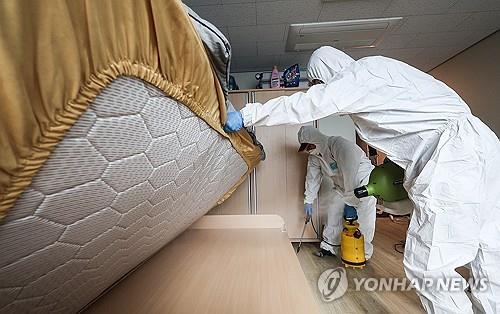
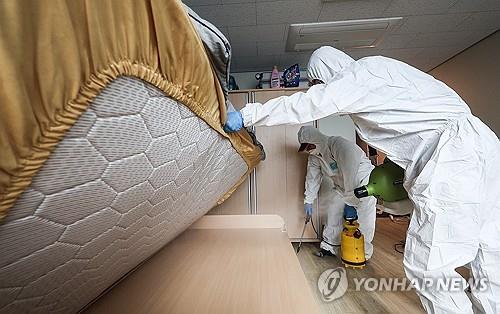
In this file photo, workers disinfect a university dorm room in the southeastern city of Daegu on Oct. 19, 2023, following a report of bedbugs. (Yonhap)
Bedbugs feed on blood, mostly at night. They normally don’t transmit infectious disease, but bedbug bites can lead to skin rashes, severe itchiness or allergic symptoms.
Many people have expressed hesitation about going to multiuse places, such as public transportation or movie theaters due to bedbug fears. Yook Chae-rim, a student at Korea University, said she was anxious after hearing about a bedbug appearance from a friend who lives in another school’s dormitory. A 28-year-old office worker, Lee, said she decided to avoid movie theaters altogether for a while due to fears of bedbug bites or having the creature carried to her home.
An online user also wrote Sunday they were feeling “crazy” because of their fears of their two old dogs and cat getting bitten by bedbugs. One private disinfection service company told Yonhap it was receiving two to three calls every day about bedbugs.
Following the establishment of a pangovernment team to fight the bedbug spread last week, the Korea Disease Control and Prevention Agency was to meet with pest control companies and pest experts Monday to assess bedbug reports and examine samples of bedbugs captured.
Seoul, whose high-density population of 9.4 million makes a bedbug infestation particularly risky, has also begun operating a bedbug report center, allowing people to quickly notify the city of bedbug appearances. Reports can also be filed through a special banner on the city’s website.
Once reports are filed, the city’s ward offices will dispatch authorities to inspect the reported areas and ensure compliance with relevant regulations and necessary insect prevention measures.
Currently, intensive hygiene inspections are under way into 3,175 bedbug-prone public facilities in Seoul, such as hotels, other types of accommodations, public bathhouses and Korean public saunas, called “jjimjilbang.” Seoul also plans to hot-steam fabric seats on subways across the city on a regular basis and eventually replace fabric seating with other safer material.
On Monday, the government also decided to establish a bedbug infestation status board to monitor and track bedbug reports, confirmed cases and government responses nationwide.
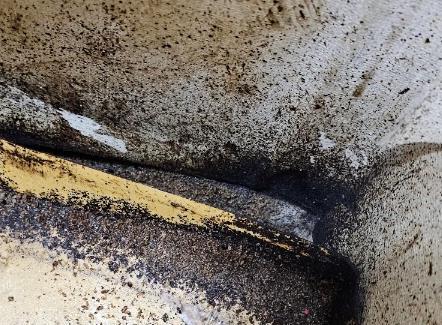
Bedbug infestation is shown in this photo provided by a private disinfection service company in Seoul. (PHOTO NOT FOR SALE) (Yonhap)
pbr@yna.co.kr
(END)
Related Articles Seoul seeks to tame bedbug infestations Seoul to launch fight against bedbugs amid nationwide reports