

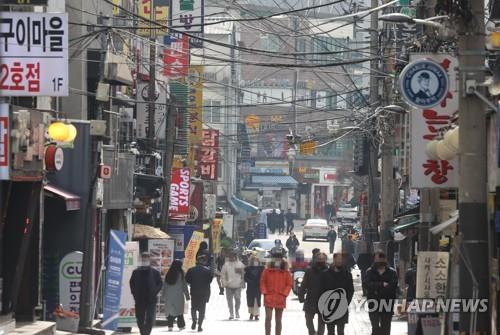
On Wednesday, Statistics Korea revealed that in 2023, the number of non-wage workers, such as self-employed individuals, in South Korea had increased by 0.56 percent from the previous year.
The total number of non-salaried workers in the country as of August was 6.72 million, a rise of 38,000 from the same time in 2022. This amounted to 23.4 percent of all employed people in the nation, a drop of 0.1 percentage point from the prior year.
Of the overall non-wage workers, those operating single-handedly, who do not hire staff, rose 0.8 percent to 4.37 million. In contrast, there were 1.41 million people who hired employees to manage their businesses, a 4.4 percent year-on-year growth.
Conversely, the amount of people serving family-run operations without pay decreased by 5.5 percent to 996,000.
Out of the total non-wage workers, 61.7 percent were male (4.15 million), and 38.3 percent female (2.58 million). The largest share of non-wage workers were those aged 60 and above, accounting for 38.8 percent, followed by those in their 50s (27 percent) and 40s (19 percent).
The data also showed that the number of non-wage workers in their 60s and 50s increased, while the amount in other age groups all declined.
22.9 percent of the total non-wage workers, or 1.54 million people, were employed in the agricultural sector, and 16.8 percent were running wholesale and retail shops. 874,000 such laborers, or 13 percent of the total, were in the accommodation and hospitality businesses.
The construction and manufacturing industries had an on-year growth in the number of their non-salaried workers, while wholesale and retail businesses, as well as agricultural and art and sporting sectors, saw a decrease.