

(ATTN: ADDS more info from 13th para, byline, new photos)
By Kim Boram
SEOUL, Oct. 31 (Yonhap) — Samsung Electronics Co. reported Tuesday that its operating profit decreased by nearly 80 percent due to a continuous economic downturn, yet its semiconductor sector experienced a recovery as a result of the heightened demand for top-tier memory chips.
The world’s biggest memory chip and smartphone maker posted an operating profit of 2.43 trillion won (US$1.8 billion) for the July-September period on a consolidated basis, a 77.6 percent dip from 10.9 trillion won a year earlier, according to a regulatory filing.
From a quarter earlier, the quarterly operating profit more than tripled from 668.5 billion won.
Sales fell 12.2 percent to 67.4 trillion won and its net income tumbled 37.8 percent to 5.84 trillion won from a year earlier.
The operating profit was 32.6 percent higher than the average estimate, according to a survey by Yonhap Infomax, the financial data firm of Yonhap News Agency. The estimate of net profit was not available.
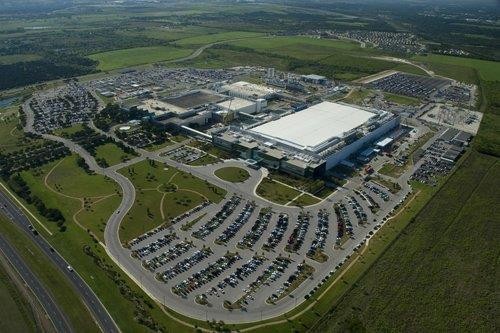
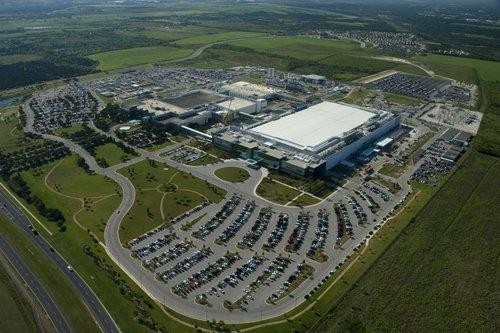
Samsung Electronics Co.'s semiconductor manufacturing facility in Austin, Texas, is seen in this photo provided by the company. (PHOTO NOT FOR SALE) (Yonhap)
Samsung’s Device Solutions division, which oversees its cash-cow chip business, made losses of 3.75 trillion won, marking the division’s third consecutive quarter of losses. The chip business’ cumulative losses amounted to 12.7 trillion won for 2023.
Its sales totaled 16.4 trillion won for the three months through September.
In the first quarter, Samsung’s chip division reported its first financial loss in 14 years, as chip inventories grew significantly amid tapering global demand. Prior to that, the division recorded losses in the first quarter of 2009.
But Samsung pointed to some positive forecasts that the chip cycle has bottomed out.
Its memory chip business saw its losses decrease thanks to increasing sales of premium products like high bandwidth memory (HBM) and double data rate 5 (DDR5).
Also, the company has received a number of purchasing inquiries from customers to stock up on parts.
Samsung said its mobile division posted 44.2 trillion won in sales and 3.7 trillion won in operating profit on brisk sales of its new foldable smartphones, including Galaxy Z Flip 5 and Fold 5.

In this file photo taken July 26, 2023, Roh Tae-moon, president and head of Samsung Electronics' mobile division, introduces the Galaxy Z Flip 5 and the Fold 5 during the Galaxy Unpacked event in Seoul. (Yonhap)
Samsung spent 11.4 trillion won on infrastructure investment, including 10.2 trillion won for chips, for the July-September period.
In the fourth quarter, Samsung said its flagship semiconductor business is expected to see its bottomline improve on a rise in demand for premium memory chips used in artificial intelligence (AI)-powered products and services and on a rebound in memory chip prices.
The company said it will focus on expanding sales of its high-performance chip lineups like DDR5 and HBM3 in the coming quarter.
In a recent event held in the United States, Samsung unveiled its fifth generation HBM3E chip Shinebolt as its key product to take the lead in the prominent AI semiconductor market.
It will likely parallel SK hynix’s HBM3, which is provided to U.S. tech giant Nvidia Corp.
“While macroeconomic uncertainty is expected to remain in 2024, we expect a recovery in the memory chip market and IT demand,” Samsung said in a statement. “We will continue to invest in facilities and R&D to secure our future competitiveness.”
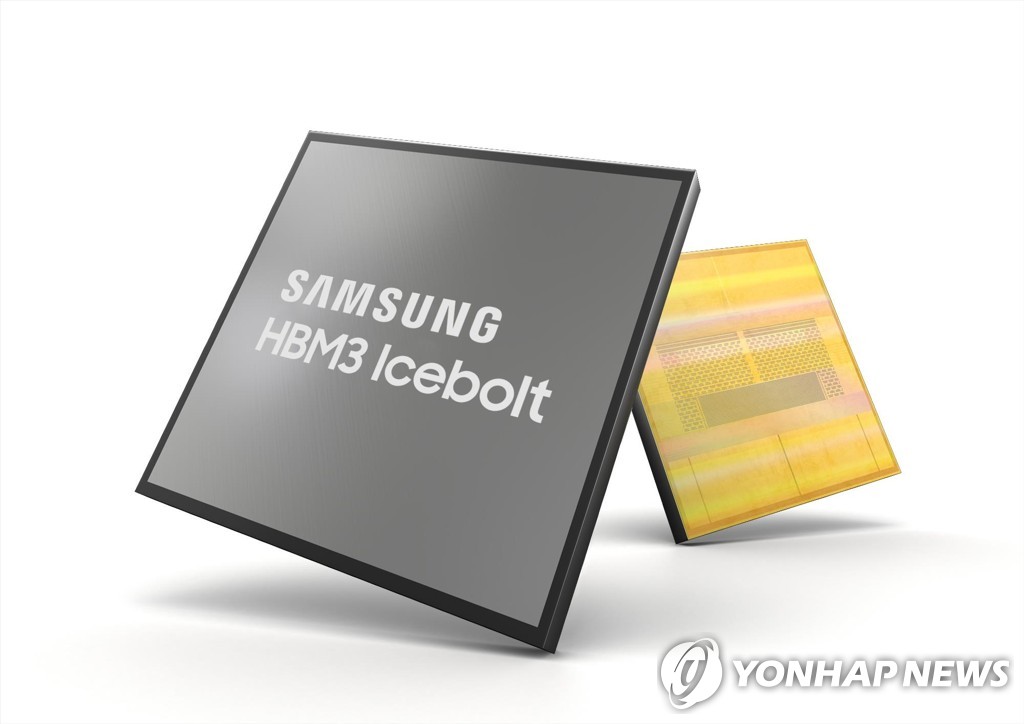
Samsung Electronics Co.'s high bandwidth memory 3, or HBM3, chip is seen in this photo provided by the company. (PHOTO NOT FOR SALE) (Yonhap)
brk@yna.co.kr
(END)