

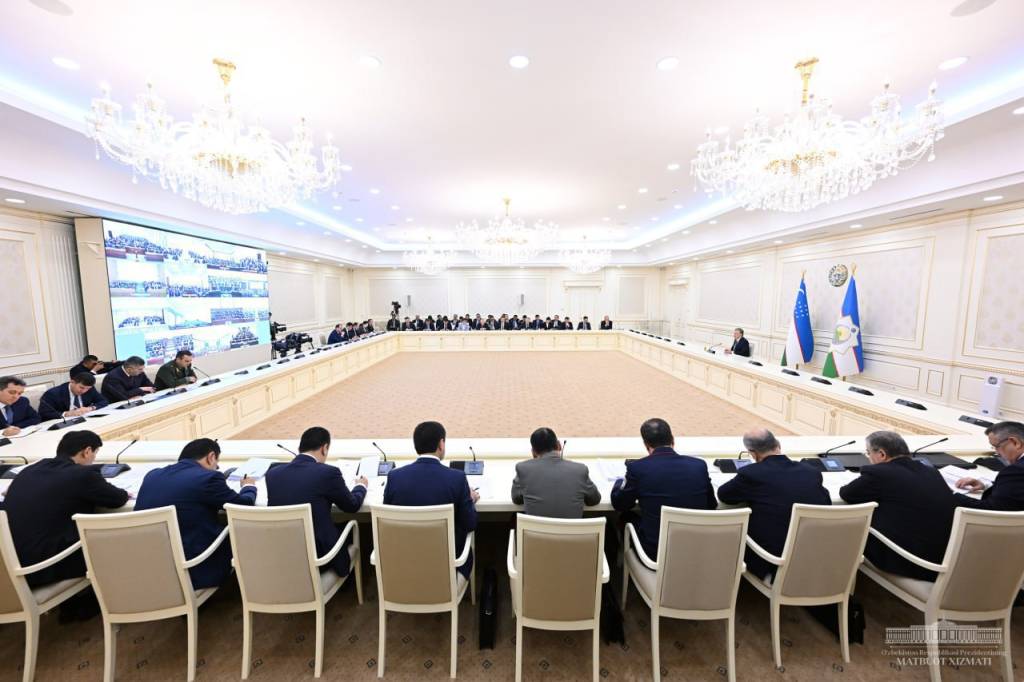
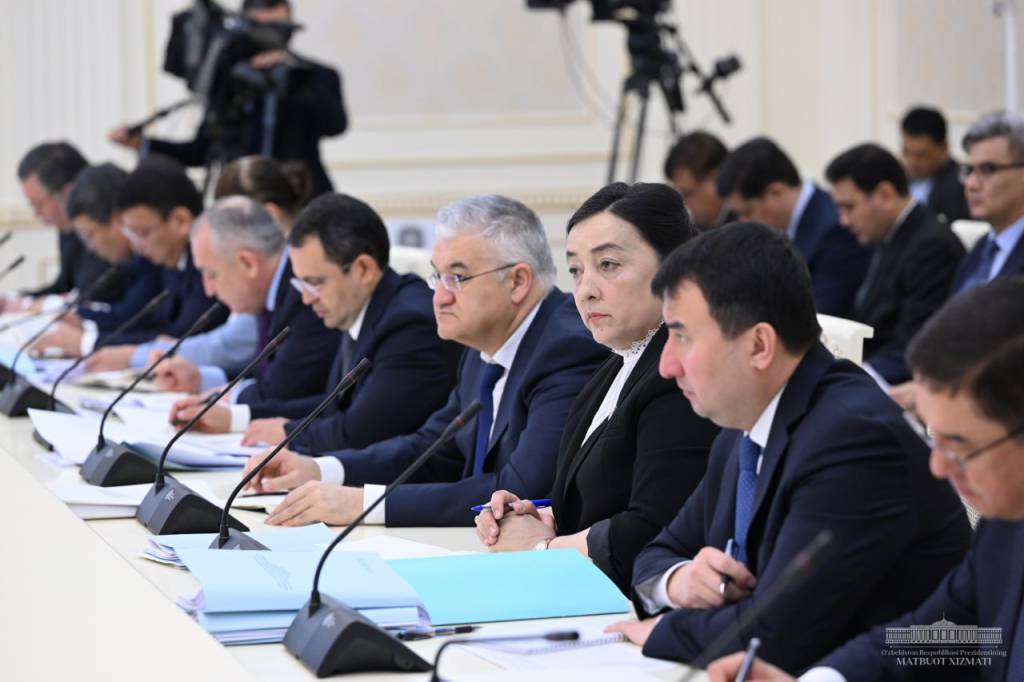
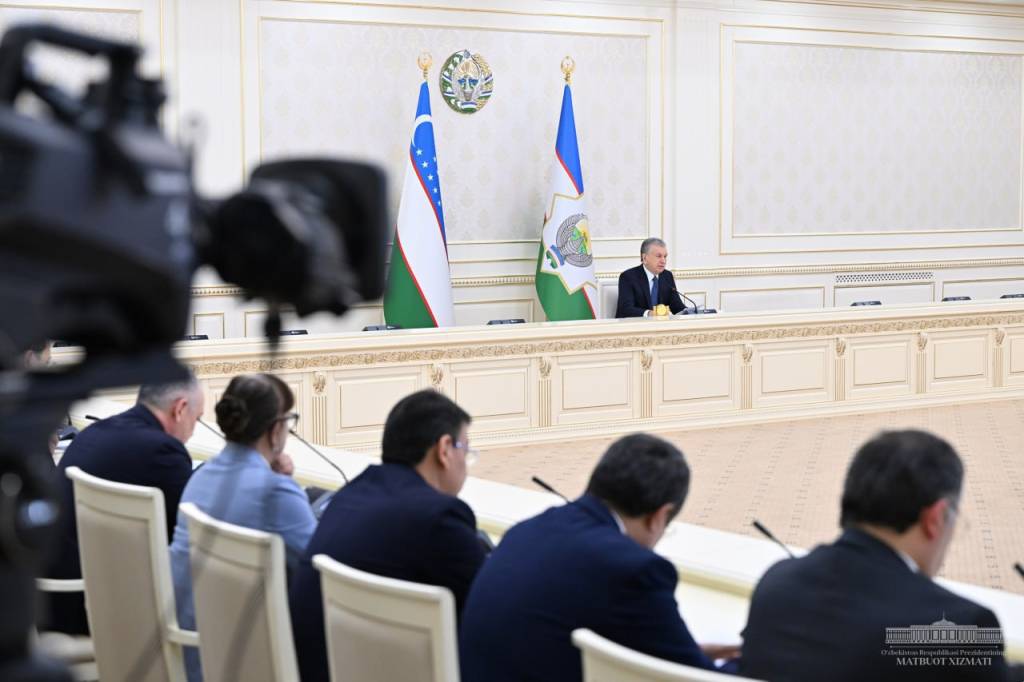
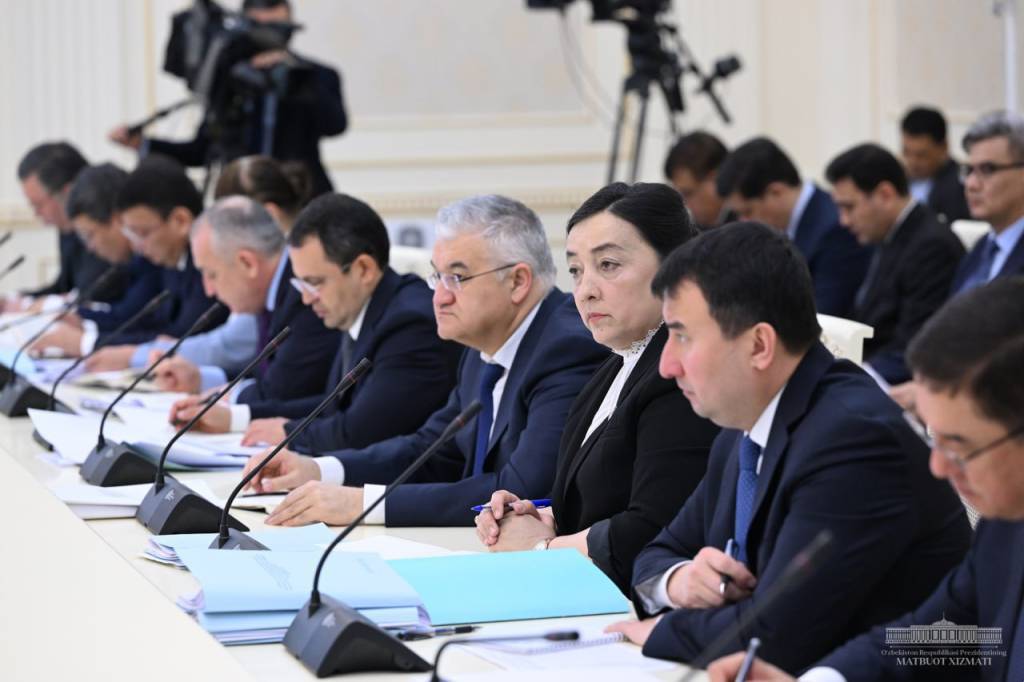
President Shavkat Mirziyoyev presided over a gathering to discuss the prime objectives of the state budget for 2024 and issues that require solutions in industries and regions.
The potential and resources available in each area, industry, and region were carefully examined to expand state budget income and optimize expenditures.
At first, specific objectives were set to decrease production costs in the industry by cutting costs in large industries. For example, expenses at 349 large industrial enterprises could be reduced by 2.1 trillion UZS in the fourth quarter of this year. To continue this work systematically, the government was ordered to create a program to reduce costs in large industries by 15-20 percent next year.
The matter of increasing the income base of the regions was taken into consideration. In particular, steps were identified to support low-power enterprises and bring them to total capacity. The importance of developing entrepreneurship, broadening the tax base, and reducing the shadow economy by providing incentive measures was noted.
It was highlighted that a breakthrough in agriculture is only possible with innovation. In this regard, the task was set to increase cotton yield to 50 centners per hectare and grain to 100 centners per hectare through the widespread use of modern scientific achievements in soil science, breeding, and agricultural technology.
The water problem in the region is becoming more acute. Over the past two years, 22 trillion UZS have been allocated from the budget for water management, including about 1 trillion in subsidies for water-saving technologies.
In this regard, the importance of increasing allocations for concreting irrigation canals and introducing water-saving technologies was emphasized. In particular, water infrastructure projects worth 1.7 trillion UZS will be implemented next year, and $300 million from international financial organizations. The Head of state discussed this issue in detail and said a three-year program for concreting canals would be adopted.
The development of the social sphere was identified as a priority in the recently adopted Uzbekistan 2030 Strategy. Much attention is paid to this in the draft state budget for 2024.
Thus, it is planned to allocate 102.5 trillion UZS for human capital development next year. This is 15 percent more than this year.
For example, the original project planned to build and reconstruct 317 schools. Taking into account the significance of this issue and the local need, the President proposed providing funds to construct 150 more schools.
It was also suggested to consider the possibility of further increasing the funds provided for by the project for pre-school education, the system of vocational and higher education.
At the same time, special attention was paid to the need for rational use of allocated funds and increasing their effectiveness.
Starting next year, the mahalla budget system will be fully launched. This means that each mahalla can be allocated up to 100 million UZS.
The Head of state noted that these funds should be directed primarily to projects that create jobs in the mahalla and alleviate the population’s concerns. Instructions were given to train mahalla chairmen in the new work system and ensure accounting and control over the expenditure of funds.
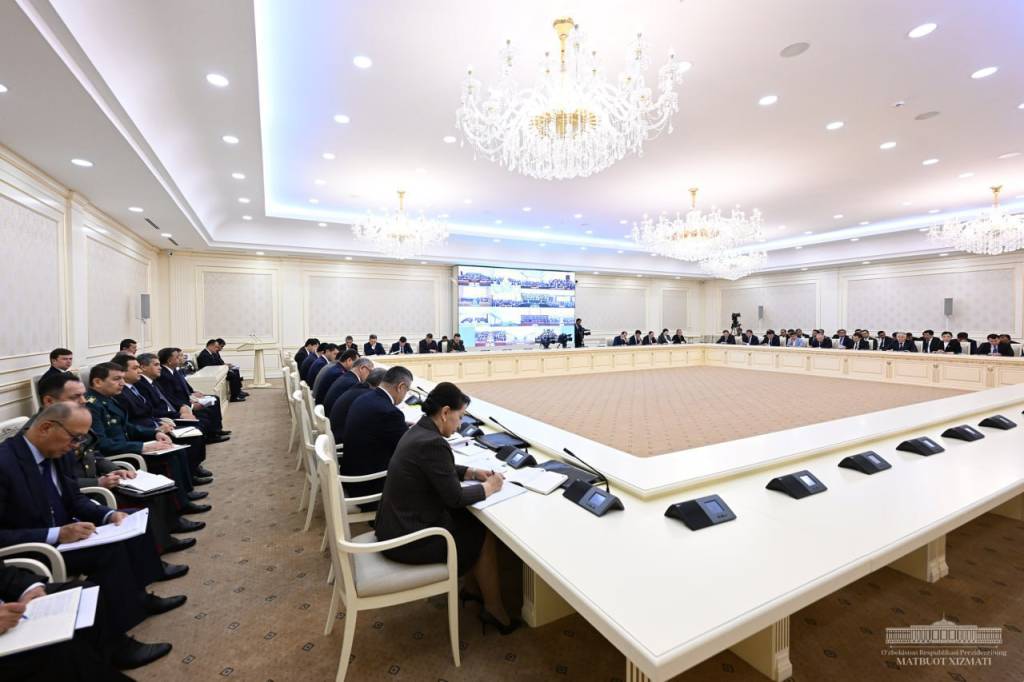
The need to introduce changes to legislation aimed at tightening budget discipline has been identified. It was strictly stated that it is inadmissible to conclude contracts that involve using budget funds directly and to expand the practice of holding transparent competitions and tenders.
Opportunities have been considered for attracting $32 billion of investment in industries, areas, and regions next year and bringing exports to $19 billion.
The draft budget for 2024, finalized considering the opinions expressed at the meeting, will be submitted for consideration to the Legislative Chamber of the Oliy Majlis.
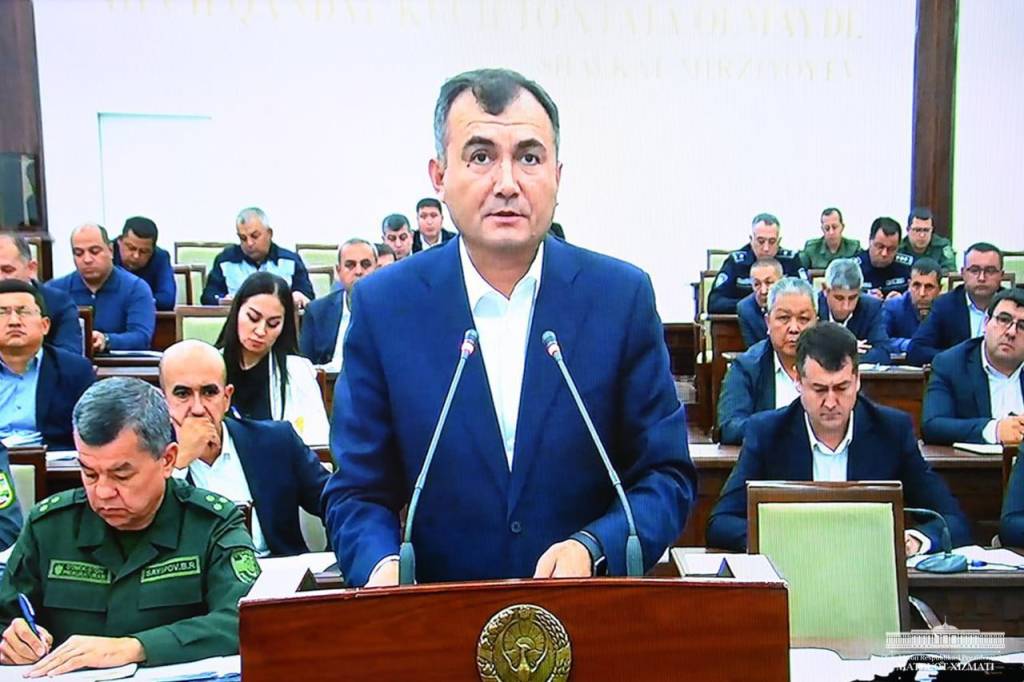
The second issue on the agenda was the socio-economic development of the regions. Using the example of Kashkadarya region, the Head of state showed the possibilities of maximizing the achievement of indicators by the end of the year and noted that development plans should be formed based on the population’s needs and problems characteristic of the region. It was noted that the ministries are responsible for developing regions along with hokims. They must conduct coordinated work to resolve issues in industries and places.
UzA