

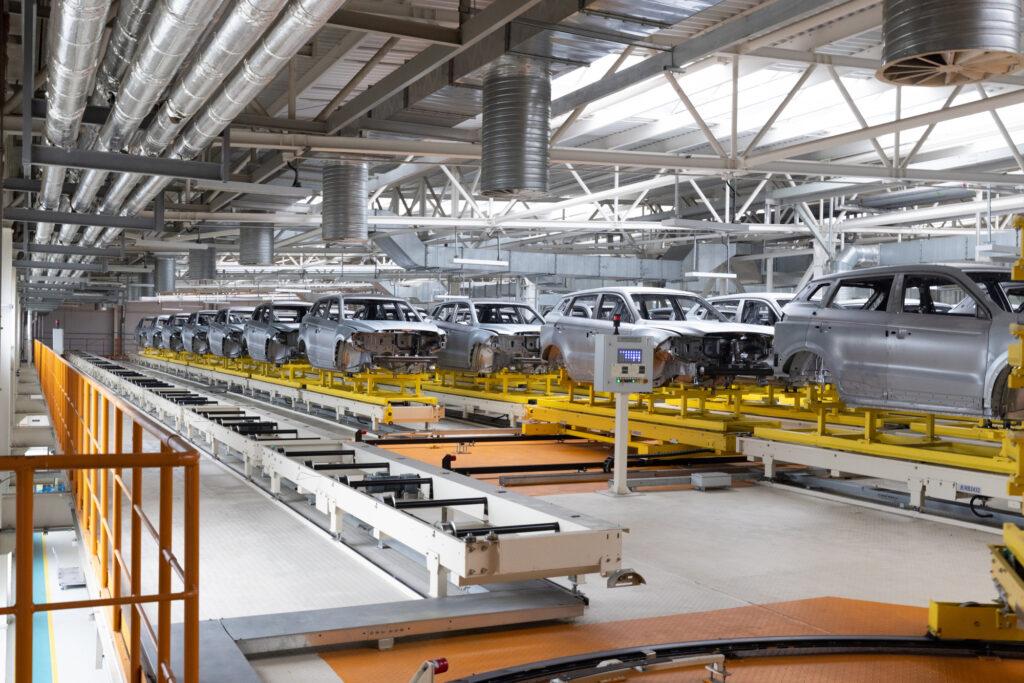
China’s automotive industry reached a significant milestone in June 2026, when monthly vehicle exports exceeded one million units for the first time. The country shipped 1.06 million cars abroad, representing a 71.2% increase from the same month one year earlier. Based on this pace, annual exports could surpass 10 million vehicles, compared with 7.1 million in the previous year and 4.9 million in 2023. The rapid increase confirms that overseas markets are becoming a central source of growth for Chinese manufacturers rather than a secondary sales channel.
The export surge comes at a time when China’s domestic automotive market is becoming more difficult. Local sales have slowed following the phaseout of electric vehicle subsidies, while demand for fuel-powered cars continues to weaken. Competition between domestic manufacturers has also intensified, placing pressure on prices and profit margins. Expanding into international markets allows Chinese producers to use their large manufacturing capacity, diversify revenue, and reduce their dependence on domestic demand.
Major Carmakers Accelerate Their International Expansion
Several leading Chinese carmakers recorded exceptional overseas growth in June. BYD sold approximately 175,000 vehicles outside China, an increase of 95% year on year. Foreign sales accounted for a record 43% of the company’s total production during the month, showing how quickly international markets are becoming part of its core strategy. BYD’s expansion is supported by its broad electric vehicle portfolio, battery capabilities, competitive pricing, and growing distribution network.
Geely also reached an important milestone, exporting 102,874 vehicles in June. This represented annual growth of 157% and marked the first time the company’s monthly exports exceeded 100,000 units. Chery reported even higher overseas volumes, with 191,062 vehicles sold abroad, up 80% year on year. The company set a new monthly export record for a Chinese carmaker for the fourth consecutive month.
These results show that China’s automotive export growth is not dependent on one manufacturer. It reflects a broader industrial shift involving multiple companies, extensive supply chains, high production capacity, and faster product development. Chinese manufacturers are increasingly able to compete across several price segments, from affordable passenger vehicles to premium electric models.
Electric Vehicles Become a Global Growth Engine
Electric vehicles are playing an increasingly important role in China’s export strategy. In 2021, EVs accounted for only around 15% of the country’s car exports. Since then, Chinese manufacturers have introduced more electric models across Europe, Southeast Asia, Latin America, the Middle East, and other markets. Their products often combine lower prices with advanced software, digital features, battery efficiency, and modern vehicle design.
The expansion is part of a wider increase in Chinese exports related to the low-carbon transition. During the first half of 2026, exports of lithium batteries increased by 37.6%, while shipments of wind turbines rose by 35.6%. Exports of electric railway locomotives grew by 45.1%, and shipments of electric motorcycles and bicycles increased by 31.5%. These figures demonstrate that China’s international position extends beyond passenger cars and includes a broader group of green technologies and electrified transport products.
Strong Trade Growth Increases International Pressure
China’s record vehicle shipments were part of a wider acceleration in foreign trade. Overall exports increased by 27% year on year in June, compared with 19.4% growth in May and an analyst forecast of 18.2%. Imports rose by 36%, while the country recorded a trade surplus of $576 billion during the first half of the year. Although the surplus was 4.7% lower than in the same period one year earlier, it remained substantial.
Technology imports also continued to grow. China imported 53.7 billion integrated circuits in June, representing a 6.8% annual increase. During the first half of the year, chip imports rose by 8.1%. However, exports of rare earths fell by 34% year on year in June and declined by 6.4% during the first six months, reflecting tighter controls on materials that are essential for advanced industrial and technological production.
The combination of rapidly rising manufactured exports and restrictions on critical raw materials is likely to increase tensions with major trading partners. The European Union and other markets have already introduced higher tariffs on certain Chinese vehicles. Further measures may include local production requirements, investment controls, stronger subsidy programmes, and additional trade investigations.
A Structural Shift in the Automotive Market
China’s first million-car export month represents more than a temporary increase in shipments. It highlights a structural change in global automotive competition. Established manufacturers in Europe, Japan, South Korea, and the United States now face competitors with large-scale production, integrated battery supply chains, advanced software, and aggressive pricing strategies.
For automotive companies, the response will require more than short-term price adjustments. Manufacturers will need to reconsider product development, supply-chain structures, regional production, technology investment, and market positioning. Governments will also face difficult decisions as they try to protect domestic industries while maintaining access to affordable electric vehicles and supporting climate objectives.
China’s progress towards more than 10 million annual vehicle exports could therefore reshape global manufacturing and trade. The companies that respond effectively will be those that understand the change as a long-term strategic development rather than a temporary export surge.