

Trade data from 2026 point to an emerging pattern across several markets: countries importing more Chinese electric vehicles are, at the same time, buying less gasoline from abroad. The relationship is not yet proof of direct substitution. Fuel imports also depend on refinery output, inventories, seasonal demand and regional supply disruptions. Still, the same combination is appearing across Australia, Japan, South Korea, the United Arab Emirates and several developing economies.
Early Signals Are Becoming Harder to Ignore
Across countries where purchases of Chinese electric vehicles have increased rapidly, gasoline imports fell by roughly one-third compared with the same period in 2025. Australia offers one of the clearest examples. Its gasoline imports declined by around 15%, or almost 900,000 tonnes, while the value of Chinese EV imports increased by about 200% and approached $2.5 billion.
Japan and South Korea are also important because both have strong domestic automotive industries. Chinese EV imports into Japan rose by about 90%, while gasoline imports declined by roughly 11%. South Korea reduced gasoline imports by around 44% while increasing purchases of Chinese electric vehicles by more than $1 billion. These figures do not establish a direct causal link, but they show that Chinese brands are gaining ground even in markets dominated by established manufacturers.
China Is Exporting Its EV Transition
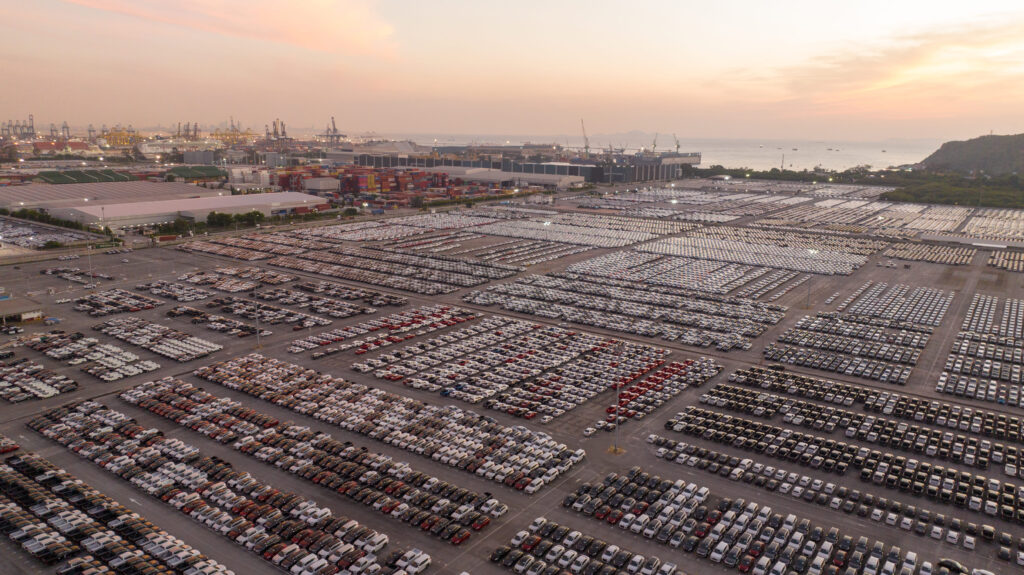
The global shift is being accelerated by China’s production scale. In May 2026, exports of passenger new-energy vehicles rose 112.6% year on year to 424,000 units. These vehicles accounted for more than half of China’s passenger-car exports that month. During the first seven months of the year, total vehicle exports increased by 55%.
China’s competitive advantage is based on large-scale battery manufacturing, integrated supply chains, rapid model development and aggressive pricing. This matters most in markets where consumers are highly sensitive to vehicle and fuel costs. In many developing economies, electrification may therefore be driven less by subsidies and more by economics.
Pakistan illustrates the potential. Imports of Chinese electric vehicles rose by around 549% and approached $500 million. For a country exposed to fuel-import costs and pressure on foreign-exchange reserves, wider EV adoption could eventually reduce demand for imported petroleum products.
The same dynamic is visible in oil-producing economies. The UAE increased purchases of Chinese EVs to more than $1.4 billion, while gasoline imports in the first half of the year fell by around 61% to 1.43 million tonnes. Refinery operations and regional disruptions explain part of the decline, but the growth of EV sales in an oil-rich market shows that hydrocarbon production does not prevent transport electrification.
The Oil Market Impact Will Be Gradual
Electric vehicles do not remove demand for crude oil overnight. Oil is still used for diesel, aviation fuel, marine fuel, petrochemicals and plastics. Even a sharp increase in EV adoption can therefore coexist with growth in other parts of the oil market.
However, the effect on road-fuel demand is already visible. In 2025, electric vehicles reduced China’s oil requirements by an estimated 1 million barrels per day compared with a scenario in which the entire vehicle fleet used internal-combustion engines. That represented about 15% of potential oil consumption from Chinese road transport.
The key question is whether this pattern spreads to emerging markets. The EV fleet in developing economies is expected to increase from roughly 21 million vehicles to 55 million by 2035. If Chinese manufacturers capture a significant share of that growth, gasoline demand could flatten earlier than many refiners and oil producers expect.
Oil Forecasts Are Moving Further Apart
Long-term expectations already differ sharply. The International Energy Agency expects accelerating electrification and greater fuel efficiency to weaken road-transport oil demand. OPEC, by contrast, has projected global oil consumption of around 124 million barrels per day by 2050.
The difference depends heavily on assumptions about population growth, aviation, freight transport, petrochemicals and EV adoption outside wealthy markets. If affordable Chinese EVs expand rapidly across Asia, Africa, Latin America and the Middle East, one of the strongest arguments for sustained gasoline-demand growth becomes less certain.
What Businesses Should Watch Next
The most useful signals will come from several indicators moving together. EV registrations should be considered alongside charging infrastructure, refinery utilisation, gasoline imports and vehicle kilometres travelled. Plug-in hybrids also need to be separated from fully electric vehicles because their impact on gasoline demand depends heavily on charging behaviour.
The transition will not begin with a sudden collapse in fuel consumption. It will first appear as slower growth, weaker import demand and increasing pressure on refinery margins. Chinese EV exports may be bringing that point closer. For energy companies, automakers and investors, tracking vehicle shipments could soon become almost as important as monitoring refinery output and oil-production policy.