

On December 10, President Shavkat Mirziyoyev led a meeting focused on effectively utilizing untapped potential, increasing job opportunities, and attracting investments in the Tashkent region.
The Tashkent region has great potential in various industries, including agriculture, services, and tourism. In the past seven years, the region’s economy has grown by 1.5 times, and the number of industrial enterprises has doubled, reaching 12,000.
However, the existing opportunities are not fully utilized. For instance, only 25% of the region’s land is used for agriculture, and the income per hectare is lower than other regions. Additionally, agricultural processing is at a very low level in cities like Bekabad and Akhangaran, as well as in Akkurgan, Chinaz, and Piskent districts. The region’s potential for ensuring food security and exporting fruit and vegetable products is also not being fully utilized.
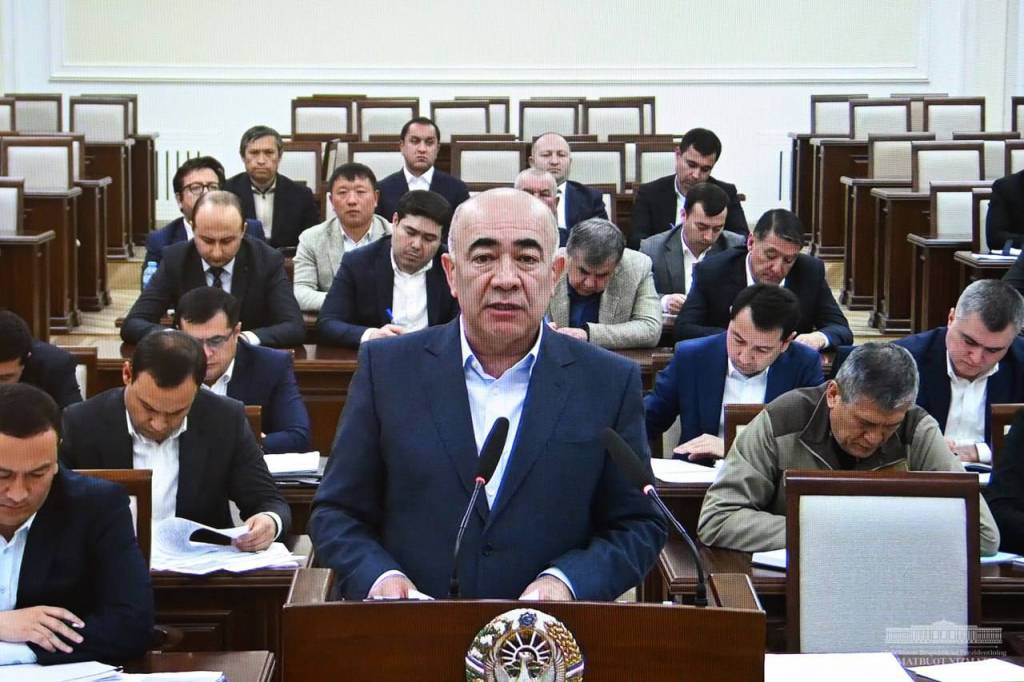
During the meeting, measures were discussed to improve the efficiency of land use. This includes entering each cluster, farm, and dehkan enterprise into the “Agroplatform” information system, which will contain data on sown areas, production volumes, number of employees, and tax revenues. Next year, seven districts specializing in fruit and vegetable products are planning to have three harvests on 52,000 hectares of land. Additionally, industrial gardens and vineyards will be established on 5,000 hectares.
In general, the land in 22 districts and cities of the region will be connected to processing and export enterprises. This is expected to result in the procurement of 3.5 million tons of fruit and vegetable products and export them for $500 million next year.
The infrastructure and logistics in the Tashkent region are favorable for entrepreneurship. However, in the past three years, the area of production, trade, and service facilities has only increased by 1.6 million square meters, which is 3.5 times less than in the capital. Out of the 9,000 hectares of land allocated for investment projects, 2,000 remain unused, and several state facilities are not being utilized.
Meanwhile, investors are interested in building a smart city, a medical cluster, and green power plants in the region. Thousands of entrepreneurs from the capital and other regions are looking for sites to expand their businesses and build new enterprises, hotels, shopping, and tourist complexes.

The shortcomings in the relevant work of the State Assets Management Agency and responsible individuals in the region were addressed. Instructions were given to auction buildings and land on favorable terms for entrepreneurs and to increase investment volumes, create new jobs, and increase exports through these facilities.
The Governor of the Tashkent region presented plans for next year to attract $5 billion in investments and increase exports to $2 billion.
The President emphasized that half of the expected investments would be directed towards already developed cities such as Almalyk, Angren, Chirchiq, Akhangaran, Zangota, and Qibray districts. It was also noted that developing additional projects in relatively underdeveloped areas such as Akkurgan, Bekabad, Buka, Parkent, Piskent, Quyichirchiq, and Chinaz is necessary to create new jobs.
The President stressed that the capabilities of the Tashkent region can lead to an increase in the income of the entire population. The task has been set to provide employment for 700,000 people next year, reduce the unemployment rate to its natural level, lift 22,000 families out of poverty, reduce the poverty rate from the current 7.2% to 4%, and provide jobs for labor migrants returning from abroad.
The President also spoke with entrepreneurs from the region who attended the meeting. He paid special attention to their proposals and initiatives and gave relevant instructions to responsible individuals.
UzA