

According to the latest figures released by Statistics Korea on Tuesday, the number of non-regular workers in South Korea dropped for the first time in three years, in 2023. This includes people working part-time and on temporary contracts, as well as outsourced laborers.
The data showed that there were 8.12 million non-regular workers in August, a decrease of 34,000 from the same period a year earlier. This is a decrease from the record high of 8.15 million in 2021.

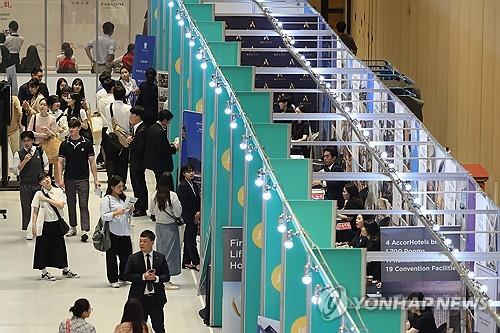
This Sept. 18, 2023, file photo shows people at a job fair in Seoul. (Yonhap)
The non-regular workers accounted for 37 percent of the total 21.95 million salaried workers in the country, compared to 37.5 percent in the previous year. The decline was attributed to a decrease in the number of temporary positions, outsourced workers, and day laborers, while the number of part-time workers increased by 0.6 percent.
The construction sector saw the largest decrease in non-regular jobs, with 97,000 fewer jobs compared to the previous year. The wholesale and retail sector also lost 42,000 temporary jobs due to the economic slowdown.

This file photo taken Aug. 9, 2023, shows a jobseeker looking at a bulletin board at an employment center in Seoul. (Yonhap)
Meanwhile, the health care and social service sector, as well as the accommodations and dining sector, gained more non-regular jobs due to the rising demand for such services post-pandemic.
The average monthly salary for non-regular workers was 1.96 million won (US$1,456) between June and August, an increase of 76,000 won from the previous year. Regular workers earned an average of 3.62 million won per month, creating a wage gap of 1.67 million won between the two types of workers – the highest such difference since 2017.
The Organization for Economic Cooperation and Development’s data showed that temporary workers accounted for 27.3 percent of the total laborers in South Korea in 2022, which was higher than the figures in Britain (5.4 percent), Germany (11.9 percent), Japan (15 percent), and Spain (21.1 percent).
South Korea has recorded monthly job growth since March 2021, and the growth rate accelerated for the second consecutive month in September. However, the number of jobs created for people aged 60 and older increased the most, while the manufacturing sector saw the largest decrease in payrolls in five months due to the weak global demand.